types of life coaches 1

13 Most Popular Types of Life Coaching (2024)

With the demand for life coaching growing at an estimated 5.4% year over year, the different types of life coaching are also growing. If you’re a coach, it’s imperative that you niche down to separate yourself from the growing competition.

Life coaches can be trained to share their wisdom, insight, and expertise in various areas of life, including (but not limited to) personal growth, emotional well-being, mental health, career development, or relationships. They may also be trained to work with children, the elderly, or parents of young children. Life coaches can be found in a variety of settings, depending on the specialization of the coach, including corporate offices, schools, universities, health care facilities, or communities.

13 Most Popular Types of Life Coaching

Business Coach

Business coaches help business owners develop their skills and improve their business. Business coaches help clients think more clearly about their business and future. They also help you to improve business skills and conduct business more effectively.

Business coaching takes many forms and is often used as a support system for business owners. It can also be used as a tool for people who aren’t currently in business but would like to learn more about the process and then start a business.

Leadership Coach

A leadership coach is a specialist in the field of leadership. They are usually people who have been in leadership positions, have had leadership roles, or have been in contact with leaders who have needed help.

Leadership coaches are the ones who are there to help leaders reach their full potential. They can help with a number of things, including presenting an idea, resolving conflict, managing stress, improving communication, and many others.

Health Coach

A health coach provides guidance in the areas of diet, exercise, and self-care. They work to help people reach their health and wellness goals.

A health coach can work with any type of client, including people who are struggling with weight or chronic illness, people who are looking to be healthier, or people who are simply interested in learning more about how to be their healthiest selves. A health coach can provide guidance to people who are ready to make changes but are unsure where to start.

Transformational Coach

A transformational coach works with people at the deepest level possible. They have a deep understanding of their client’s inner world. They know how to help clients find their authentic selves and live a life that is aligned with their highest values.

They believe that a coach’s role is to support clients in creating a life of meaning that is congruent with their highest wisdom. They might use a combination of practices from different modalities, such as coaching, meditation, yoga, or neuro-linguistic programming to name a few.

They might integrate spirituality as a fundamental part of their practices. Transformational coaches also have a strong emphasis on self-care and conscious living.

Grief Coach

A grief coach is a person who specializes in helping others through their grief process. Grief coaches are there to support, help and listen to people who are grieving.

A grief coach is someone who helps you to understand your feelings, process your feelings, and find ways to move forward and heal following a loss.

Grief coaching is not, nor is it a replacement for therapy or counseling, it can be used as a supplement to it though.

Meditation Coach

Meditation coaches work with people who want to learn to meditate or want to incorporate meditation into their current practice. They often have experience learning and teaching meditation, and they provide instruction and support to help people on their journey.

They might also provide resources like books and CDs, provide guided meditations and videos, or offer meditation advice and tips.

Meditation coaches might offer meditation classes, provide meditation sessions on Skype or in person, and help people organize their own meditation practice. Meditation coaches might, and frequently do offer other services, such as life coaching, transformational coaching, Yoga. etc.

Positive Psychology Coach

More often, people are finding that their lives are becoming more and more stressful, and they are having a hard time keeping up with their daily lives.

A positive psychology coach is someone who helps people achieve a more positive life balance.

They help people to find things that are true to them and to feel good about what they do. They help people feel fulfilled and focus on their strengths more so than weaknesses.

Mindfulness Coach

A mindfulness coach will work with clients to help them create a mindfulness practice. Some examples of mindfulness practice include observing thoughts and feeling sensations, sitting in silence, and focusing on the present moment.

Mindfulness coaching helps to reduce this stress by helping people to better understand their thoughts and emotional reactions and learn how to create new habits and improve their daily functioning.

There are many benefits of mindfulness coaching. These benefits include increased happiness, reduced stress, greater self-awareness, improved emotional regulation, better sleep, and improved relationships.

Spiritual Coach

A spiritual coach is a professional who helps people deepen their understanding and awareness of spirituality. A spiritual coach could work with someone who wishes to explore their spirituality and deepen meaning or explore a spiritual practice with someone who has no previous background in spirituality.

Spiritual coaches work with a wide range of people including spiritual seekers, those who wish to integrate spirituality into their work, and those who already have a spiritual practice.

They may work with individuals, nonprofit organizations, and corporations, or they may work with a specific spiritual movement, such as paganism. They may work on an informal or formal level. The work can be one-on-one, or in a group, with one person acting as both coach and facilitator.

Christian Life Coach

A Christian life coach is someone who helps others who want to live their lives as Christ-centered.

A Christian life coach helps in a variety of ways, including providing spiritual encouragement to those who are struggling, helping them to establish a meaningful relationship with God, and providing guidance and support in their life.

A Christian life coach can also help to develop spiritual and emotional health. They can help to identify and overcome the obstacles in your life that are keeping people from being the best they can be.

A Christian life coach works to establish a meaningful relationship with God, using His word to guide people to make wiser decisions in their lives. A Christian life coach can help you to find ways to live a healthy and balanced life.

Life Purpose Coach

A life purpose coach is someone who can help one find their true life purpose. They are coaches who help one discover one’s life purpose and to help find a career and relationships that will help live that purpose in the way that is most meaningful to them.

Relationship Coach

Relationship coaches help individuals and couples create healthy relationships. They assist with issues from self-esteem to intimacy to conflict resolution.

They can offer advice and insights on topics like communication, intimacy, and trust.

The field of relationship coaching is relatively new. It wasn’t until the 1990s that what we now call relationship coaching started to emerge. The term “relationship coach” was coined by the author, speaker, and relationship expert, Dr. Daphne Rose Kingma.

Executive Coach

The executive coach is the best option when an executive is not sure what to do next. These coaches help to identify, assess and prioritize goals. When an executive is in a specific situation, the coach can help with the decision-making process.

They help executives to think strategically and to develop their own unique leadership style, identify the right people to work with, find the right team to lead a new business, and more.

Nutrition Coach

A nutrition coach is someone who provides nutritional advice and guidance to help one with their eating habits. They do this by taking a coaching approach to their nutrition, starting with behaviour change.

A nutrition coach works with people who are trying to lose weight, gain weight, or change their eating habits for the better. They also work with people who have special dietary needs such as gluten-free, vegan, dairy-free, or paleo diets. A nutrition coach also helps to address health concerns such as weight loss, food allergies, digestive issues, or lack of energy.

herbalist certification

3 Best Herbalist Certification Schools Online (2025)

Becoming a certified herbalist opens the door to a fulfilling career in natural health and wellness, allowing you to help others with plant-based remedies and holistic healing techniques. Whether you’re passionate about herbal medicine, looking to deepen your knowledge, or seeking a career as a professional herbalist, earning a certification is a crucial step.

With many online herbalist certification programs available, it’s important to choose a school that offers comprehensive, evidence-based training in the use of herbs for healing, wellness, and preventive care. Accredited programs provide the expertise you need to confidently work with clients and incorporate herbal medicine into your practice.

In this post, we’ll highlight the best online herbalist certification schools, helping you find a program that aligns with your goals and equips you with the knowledge to succeed in the field of herbal medicine.

Important: Herbalist Certifications Aren’t Regulated

What does this mean for you? You can receive a certificate from any school but you won’t be classified as a certified herbalist. With herbalism not being a regulated industry, it’s extremely important to vet the herbalist school you plan on learning from to make sure they’re legitimate and have high-quality standards. This post will help you do just that.

3 Best Herbalist Certification Schools Online

Gold Standard (SAVE $150)

herbalist certification
Visit Website
Read Review

Runner Up

herbalist course online
Visit Website
Read Review

Honourable Mention

herbalist school
Visit Website
Read Review


Compare 3 Of The Best Online Herbalist Certification Schools

Scroll right to view more columns. If you are viewing from a phone or tablet I recommend rotating into a landscape for the best viewing experience.

herbalist certification
herbalist course online 1
herbalist school
SchoolHerbal AcademyChestnut School of Herbal MedicinePacific Rim College
Visit WebsiteVisit WebsiteVisit Website
Flagship ProgramClinical HerbalistClinical HerbalistCommunity Herbalist
Created with Industry Leaders✔
Help you stand out from the competition✔✔✔
Can Start Anytime✔✔
Prerequisite RequirementsNoneNoneNone
Length of ProgramSelf-pacedSelf-paced15 weeks
Total Hours7701000270
Hours/weekAnyAny15-20
Live Lectures✔
1-on-1 Mentoring available (no additional cost)✔✔✔
Digital Textbooks✔✔✔
Video Content For Modules✔✔✔
Prepares for Hands-On Clinical Training (if desired)✔✔
Medicine Making✔✔✔
Organic Herb Cultivation✔✔✔
Foraging and Wild Harvesting of Herbs✔✔✔
Herbal Safety✔✔✔
Herbal Actions and Medical Herbalism✔✔✔
Botany and Plant Identification✔✔✔
Lifetime Access To Resources✔✔✔
Learn How To Start Your Own Herbalist Practice✔✔
Business Marketing✔✔
Private Group for Students✔✔✔
Investment (if paid in full)$2140$2999$2799
Payment Plan$375 x 6$167 x 20$260 x 12
Read ReviewRead ReviewRead Review
Visit WebsiteVisit WebsiteVisit Website


#1 Online Herbalist Certification School

herbalist certification

School: Herbal Academy

Flagship Program:
Clinical Herbalist Path Package
*Do you have a heart set on an herbal career with goals of becoming a professional or clinical herbalist? This guided pathway will help you get there!

Cost: $2545 $2345
Payment Plans: $424 $391 x 6

Other Programs:
Introductory Herbal Course
Intermediate Herbal Course
Business Herbal Course
Advanced Herbal Course
Family Herbalist Path Package
Entrepreneur Herbalist Path Package
Professional Herbalist Path Package
Clinical Herbalist Path Package
Cost: $297 – $1593
Payment Plans: $49.50 – $265.50

Visit Herbal Academy

Introduction to Herbal Academy

A Glance into the Herbal Academy

Marlene Adelmann, Founder of Herbal Academy

A Message from Marlene Adelmann, Founder of Herbal Academy

Herbal Academy Mission

Herbal Academy Mission
Visit Herbal Academy

Herbal Academy Review

Overall
9
Pros
All online
No waiting, start any time
Flagship Certificate: Clinical Herbalist
Learn from industry leaders
Course instructor support
Private Facebook community
Invest in 1 course at a time
Lifetime access
cons
No live lectures
Written material is digital, if you want a printed textbook version it’ll cost you extra.

Clinical Herbalist Path

INTRODUCTORY HERBAL COURSE OVERVIEW (95 hrs)

UNIT 1: HERBAL BASICS

The Herbal Approach and World Healing Traditions; Choosing Herbs; Storing Herbs; Herbal Teas and Tinctures; Syrups and Topical Applications; Herbal Actions; Trees, Mushrooms, and Seaweed; Anatomy Overview; Developing your Materia Medica; Making an Herbarium

UNIT 2: KITCHEN HERBS

Wellness in Your Kitchen; Spices; Kitchen Materia Medica; Kitchen Preparations; Herb Gardening; Wildcrafting; Bringing it Home

UNIT 3: HERBAL SUPPORT FOR COMMON COMPLAINTS

The Immune System; Building a Healthy Terrain; Healthy Digestion; Minimizing Exposure to Environmental Toxins; Tonic and Adaptogen Herbs; The Respiratory System; Coughs, Colds, and the Flu; Herbs for Children; Herbal Support for Reproductive Health; Vitamin D

UNIT 4: HERBAL SUPPORT FOR THE NERVOUS SYSTEM

Overview of the Nervous System; Stress; Nervines and Adaptogenic Herbs; Tension Headaches and Migraines; Sleep and Insomnia; The B Vitamins

UNIT 5: BODY CARE

Introduction to the Skin; Common Skin Conditions; Herbal Support for Healthy Skin; Internal Health = External Health; Topical Oils; Salves and Balms; Body Butters; Salt and Sugar Scrubs; Herbal Baths; Facial Cleansers; Moisturizers; Toners; Hair Care; Healthy Aging

UNIT 6: THE HOLISTIC APPROACH

Conventional Allopathic Medicine; The Holistic Model; The Holistic Approach to Herbalism; Integration; The Holistic Body; The Power of the Mind and the Placebo Response; Holistic Approaches in Practice; History of Western Herbalism; Integrating the Holistic Approach

INTERMEDIATE HERBAL COURSE OVERVIEW (175 Hrs)

UNIT 1: INTRODUCTION AND HERBAL REVIEW

Why Herbs?; How Herbs Work; Herbal Traditions; Challenges to Herbalism; Making the Reconnection; Herbal First Aid Booklet – Making Herbal Preparations; Herbal Actions; Herbal Energetics; Ayurveda; Chinese Medicine; Creating Formulas; Dosage; Side Effects and Safety; Herb-Drug Interactions; Drying and Storing Herbs

UNIT 2: FOOD IS THE FOUNDATION

Eating with the Seasons; Nutrition; Foods for Convalescence; Mindful Eating; Kitchen Cupboard Herbs; Making Herb-Infused Vinegars, Shrubs, Oils, Honeys, Cordials, Syrups, and Oxymels; Foraging Wild Edibles and Herbs; United Plant Savers At-Risk Plants; Gratitude and Ceremony; Creating A Materia Medica; Phytochemicals

UNIT 3: THE DIGESTIVE SYSTEM

Digestive System Overview; The Importance of Healthy Digestion; The Gut/Brain Connection; The Gut/Immune System Connection; Supporting Digestive Health with Bitters and Carminatives; Cultivating a Healthy Gut Microbiome; Addressing Digestive Imbalances with Herbs; Digestive System Materia Medica; Breathing as a Wellness Tool

UNIT 4: THE IMMUNE SYSTEM

Overview of the Immune System; Diet, Lifestyle, and Herbal Support for a Healthy Immune System; Addressing Bacterial, Viral, and Fungal Infections with Herbs; Herbal Support for Autoimmune Conditions and Allergies; Immune System Materia Medica; Wellness-Promoting Mushrooms

UNIT 5: THE NERVOUS SYSTEM

Overview of the Nervous System; The Physiology of Stress; Herbal and Lifestyle Support for Stress; Herbal Support for Headaches; Herbal Support for Healthy Sleep; Herbal Support for Anxiety and Depression; Nervous System Materia Medica; Flower Essences

UNIT 6: THE CARDIOVASCULAR SYSTEM

Cardiovascular System Overview; Supporting Optimal Heart Health; Supporting Healthy Blood Pressure and Cholesterol; Food for the Heart; Addressing Cardiovascular Imbalances with Herbs; A Heart-Healthy Diet; Care of The Energetic Heart; Cardiovascular System Materia Medica

UNIT 7: THE LIVER

Overview of the Liver; Diet and Lifestyle Support for a Healthy Liver; Herbal Liver Tonics; Herbal Support for Liver Imbalance; Liver Materia Medica; Healthy Skin; Herbal Skin Care Booklet

UNIT 8: THE RESPIRATORY SYSTEM

Respiratory System Overview; Maintaining a Healthy Respiratory System; Heart Rate Variability; Healthy Breathing and Herbal Lung Tonics; Herbal Support for Respiratory Imbalances; Respiratory Tissue States; Plants and Clean Air; Respiratory System Materia Medica; Aromatherapy for the Respiratory System

UNIT 9: THE URINARY SYSTEM

Overview of the Urinary System; Supporting a Healthy Urinary System; Water and Fluids; Herbal Bladder and Kidney Tonics; Addressing Urinary Imbalances with Herbs; Urinary System Materia Medica

UNIT 10: CHILDREN

Safety; Dosing; The Top Four Herbs for Kids; Herbal Support for Common Childhood Discomforts; Formulas and Recipes for Children; Herbalism and the Law

ADVANCED HERBAL COURSE OVERVIEW (500 Hrs)

UNIT 1: HERBAL WISDOM TRADITIONS AND HISTORY

The Humoral System and Astrological Medicine; American Botanical Movement; Other American Botanical Traditions; Traditional Chinese Medicine; Ayurveda; Global Healing Traditions; Modern Allopathy and Holistic Healing

“We are not makers of history. We are made by history.” – Martin Luther King, Jr.

In honoring those who have come before us and paved the way for herbal healing into modern times, the course begins by setting the stage with the unfolding history and herbal wisdom traditions which have shaped Western Herbalism: from the rich historical knowledge developed within the humoral system of the ancient Greeks, traditional Chinese medicine, and Ayurveda; to the burgeoning discoveries of the American botanical movement in the New World as it was influenced by indigenous and European systems of healing; to the development of modern allopathy and then an awakening to the potential for a collaborative approach. The course explores the frames through which many cultures have integrated plants into a holistic approach to wellness, grounding our current and ever-expanding knowledge in all that has come before.

UNIT 2: BOTANY AND PHYTOCHEMISTRY

Plant Identification and Taxonomy; Plant Chemistry; Pharmacognosy and Pharmacology; Herb-Drug Interactions; How to Evaluate Scientific Research

This unit focuses on the hard sciences of botany, taxonomy, and pharmacology in order to prepare students of herbalism with the tools necessary to identify medicinal plants in the field, to understand and evaluate scientific research regarding phytochemistry and herb-drug interactions, and to celebrate the knowledge that scientific research brings to the traditions of herbalism. This unit will assist in bringing detail to our understanding of the intelligence of the plants themselves and how this intelligence communicates with that of the human body.

UNIT 3: MAKING AND SELLING HERBAL PRODUCTS

Sourcing Herbs and Ingredients for Medicine Making or Product Manufacture; Good Manufacturing Practices for Dietary Supplements (21 CFR 111); Labeling Herbal Products; Creating a Business and a Brand

This unit is geared for those who want to develop a herbal products business, and includes information on sourcing herbs sustainably, detailed guidance on complying with good manufacturing practices and legal requirements for labeling in the U.S., and helpful business advice on creating a brand from an herbalist who has done so successfully. The course will get you started in the right direction, giving you valuable information up front to help guide you through the process and save time, money, and frustration down the road.

UNIT 4: BLOOD, LYMPH, AND MUCUS MEMBRANES

Anatomy Review; Hemodynamics and Blood Function; Lymphatic Physiology and Mucous Membrane Physiology; Common Conditions; Herbs and Healing; Case Study

In addition to performing their own unique functions, the blood, lymph, and mucous membranes have in common the vitally important function of working in unison to defend your body from exposure to foreign elements. The mucous membranes cover all internal body surfaces that have direct exposure to elements of the outside environment. Along with the blood, the lymphatic system is responsible for herding immune cells quickly and efficiently towards invading pathogens. Recognizing common conditions that could compromise these systems is vitally important.

This unit explores the anatomy and physiology, common complaints, etiology of imbalances, and herbal therapeutic approaches appropriate for the blood, the lymph system, and mucous membranes.

UNIT 5: THE ENDOCRINE SYSTEM

Anatomy: Major players and Messengers; Physiology: The Ultimate Messaging System; General Health and Wellness: Don’t Shoot the Messengers; Common Conditions of the Endocrine System

This unit explores the anatomy and physiology of the endocrine system, how to support the general health and wellness of this system, common complaints, etiology of imbalances, and conventional and herbal therapeutic approaches.

UNIT 6: MALE HEALTH AND WELLNESS

The Male Reproductive System; Boys: Youth through Puberty; Cultural and Social Aspects of Male Care; General Health Care; The Male Heart; The Prostate; Male Hormone Balance; Male Stressors and Other Common Complaints; Case Study

Unit 6 focuses on what it is like to live in the male body and how to care for it, beginning in this lesson with male anatomy and physiology of the reproductive system.

This unit takes a thorough look at the anatomy and physiology of the male reproductive system, heart, and prostate, and discusses general wellness support for both boys and men. This lesson also provides information on support for common physical and emotional imbalances men may experience.

UNIT 7: FEMALE HEALTH AND WELLNESS

Menstrual Cycle and Reproductive Potential; Girls Wellness; The Psychology of Female Wellness; General Health Care for Women; Breast Health; Common Female Complaints; Fertility, Pregnancy, Miscarriage, and Birth; Managing the Menopausal Transition; Case Study

Cultivating sensitivity and openness to the diversity among humans and their bodies are essential skills for clinicians, and this is particularly true in developing clinical skills in supporting uterine-ovarian health in clients seeking herbal and nutritional care.

This unit takes a thorough look at the anatomy and physiology of the female reproductive system, and discusses general wellness support for both girls and women, provides information on support for common physical and emotional imbalances women may experience, support for breast health, fertility, pregnancy, miscarriage, and birth; and takes an in-depth look at the menopausal transition and herbal strategies for support.

UNIT 8: THE MUSCULOSKELETAL SYSTEM

Anatomy and Physiology of Bones, Tendons, and Ligaments;Anatomy and Physiology of Muscles; General Health and Wellness of the Musculoskeletal System; Common Conditions and the Herbal Approach; Managing Pain; Case Study

Understanding the various ways that tendons, ligaments, connective tissues, and bone interact with the entire body can aid us in determining the best way to offer a full body support plan. Having a clear understanding of the bone’s role in the immune system and how these tissues are involved in body wide nutrient balance can offer a view of the overall health of the body system. With these tools, an herbalist can offer a more health and wellness-based protocol rather than one based on curing dis-ease.

This unit explores the anatomy and physiology of the bones, tendons, ligaments, and muscles of the musculoskeletal system; general health and wellness of this system; and investigates herbal support for common conditions as well as how to manage pain and inflammation associated with the musculoskeletal system.

UNIT 9: HEALTHY AGING WITH HERBS

Longevity, Vitality, and Prevention; Working with Elders: Important Considerations; for the Herbal Consultation; The Aging Skin; Illness and Disease of an Aging Population

Imprinted on our DNA is the potential to survive. While our bodies eventually age and decay, our bodies still move through life with an impetus to move toward life, toward vitality and longevity. Immortality may never be our birthright—looking toward traditional viewpoints regarding the gifts and purpose of aging, any fountain of youth would be out of place. However, whatever our age or stage of life, we are able to employ specific lifestyle adaptations, dietary choices and health-supportive mindsets that can help us to avoid age-associated illness and disease and add vitality, wellness and enjoyment to our lives.

This unit discusses what it means to age, the energetics of aging, and herbal support for vitality in the aging process; takes a thoughtful look at important perspectives and considerations when conducting an herbal consultation with elders; looks at the anatomy, physiology, and herbal support for aging skin; and discusses common physical imbalances that accompany aging and herbal therapeutics to support them.

UNIT 10: WEIGHT MANAGEMENT FOR HEALTH AND WELLNESS

Overweight and Obesity; The Brain-Gut Connection and Psychology of Food; The Energetics of Food; Sugar; Common Food Allergies and Sensitivities; Fasting and Detox; Daily Living with Powerful Herbs; Dieting

Because nutrition is at the root of vibrant wellness, this unit dives into weight management for health, exploring the causes and effects of obesity, the fascinating brain-gut connection and energetics of food, the effect of sugar on the body, understanding food allergies and food sensitivities, and supporting a return to optimum body function via fasting and detox, healthy dieting, and integration of herbs into the daily diet.

By taking a holistic wellness approach with clients and focusing on health rather than weight, herbalists can teach that weight is only one component of health. It might be difficult to advance this philosophy what with the entrenched media, stereotypes, and what our society thinks we know of weight and obesity, but our clients will appreciate it and benefit.

UNIT 11: HEALING

The Nature of Healing; The Mind-Body Connection; Reaching the Spirit; Aromatherapy

Take a broad look at some of the determinants which influence the nature of healing. While healing is dynamic and looks different for each individual, there are basic similarities in our wellness needs. Healing involves engaging the mind, body and spirit. There is value in connection – to our own thought processes, to humanity, and to the natural world. The beauty of working with herbs along this path is that the very nature of herbalism connects us to resources and experiences that support healing on all of these levels.

This unit explores the nature and philosophy of physical and emotional healing, the importance of the mind-body connection and how it is understood in different systems of healing, how emotional conditions affect physical health and ways to reach the emotional body or spirit, and a thorough look at aromatherapy and how to use essential oils for healing.

UNIT 12: ASSESSMENT AND HERBAL THERAPEUTICS

Assessing the Body; Clinical Intake; Advanced Formulation

The good herbalist is the one who differentiates between one person and the next and learns to set the profile of the herb in the person or the disturbance. Each person is different and we need to accommodate ourselves to them and understand their differences. Evaluation is a long and difficult education, but don’t worry! Take every chance to learn.

This unit explores the practical skills of assessing the body using energetic and tissue state frameworks, tongue, face, and pulse assessment techniques, the clinical intake process, and advanced formulation of herbal remedies. Using this guidance and practice, you’ll learn to develop your own evaluation style.

UNIT 13: BECOMING AN HERBALIST

Defining your Path; Receiving Clinical Training and Experience; Cultivating a Healing Presence; Continuing to Grow; Useful Resources and Organizations

As an herbalist, your path will evolve over time. One of the most beautiful things about herbalism is the way that each individual is able to express themself through their practice. There are many different ways to be an herbalist, and each person has different strengths, interests, and preferences that become an integral part of their path.

This unit explores how to define your path as an herbalist, how to seek and receive additional clinical training and experience, how to cultivate an authentic healing presence and communicate that to your clients, and how to continue to grow your skillset throughout your career.

UNIT 14: YOU ARE AN HERBALIST

Introduction to Clinical Practice; Herbalism and the Law; Client Records and Confidentiality; The Client/Practitioner Relationship

Now that you have gotten your feet wet with key aspects of clinical training and practice, it’s time for the fun part: envisioning and creating your own herbal practice! If you already have an herbal practice in place, let this lesson be an inspiration for ways you may adapt or improve your practice. This is the time to put a lot of your actual herbal training aside for a bit and focus on the ideal business you’d like to create for yourself and how to put it together.

This unit will help you gain an understanding of what a clinical practice entails, how to acquire clinical training, what your legal responsibilities are, and how to run a practice, from keeping client records to developing intake procedures, and cultivating effective working relationships with your clients.

CASE STUDIES

Case studies are included throughout the course to illustrate imbalance experienced by real people and the clinical assessment and herbal protocols used to correct that imbalance.

Herbal Academy FAQ

The following is an FAQ for their Clinical Herbalist Path

What kind of certificate will I receive and will I be a certified herbalist?

Upon completion of any of our foundational courses, you’ll receive a certificate of completion suitable for framing that states you’ve completed the course under the direction of the Herbal Academy. You will receive a certificate after successfully completing each individual course.

Note that because the field of herbalism is not officially regulated by any specific set of standards or governing body in the United States, certification is a tricky subject. While one can study in herbalism courses for a certificate of completion, one cannot become a “certified herbalist.”

The practice of herbalism is protected by the first amendment right to free speech. An herbalist cannot treat, cure, diagnose, prescribe, or see patients, instead, they can educate clients about dietary and lifestyle habits and make suggestions for herbs that will help balance the body and support wellness.

After taking this course, can I become a Registered Herbalist with the American Herbalists Guild (AHG)?

Our courses will provide study hours on such foundational topics as history and herbal traditions, materia medica, botany, anatomy and physiology, therapeutics, and practice management that are required educational topics for becoming an AHG Registered Herbalist.

See AHG’s recommended areas of study here: https://www.americanherbalistsguild.com/herbal_education

Depending on how extensive the student’s herbal background is, additional advanced training hours may likely be needed to fulfill the AHG requirement of 800 study hours. In addition, students need to seek out 400 hours of hands-on training under the guidance of an experienced herbalist or mentoring program to gain the clinical experience needed. Of course, the AHG review process will evaluate a student’s proficiency in herbalism, including a working knowledge of an extensive materia medica as well as case studies gained through hands-on experience, and is not just based on study hours.

How long will it take me to complete this course package?

All of our online herbalism courses are self-paced, which gives you the flexibility to study whenever your schedule allows. Everyone studies at a different rate, but we have found that the average completion time is approximately 95 hours for the Introductory Herbal Course, 175 hours for the Intermediate Herbal Course, and 500 hours for the Advanced Herbal Course, which is a combined 770 hours for the Clinical Herbalist Path Package. Because our courses are self-paced, there are no live lectures to attend and students have access to their courses 24 hours a day, 7 days a week. 

What materials will I need?

You will need an internet connection to access course materials along with a computer, tablet, or smartphone. You will also want to have a writing utensil and notebook to keep notes (our Materia Medica Journal is a great resource for this!). You may like to purchase herbs, oils, butters, waxes, and containers for any of the recipes that you choose to make. This package comes with discounts to a variety of online herb suppliers to help make your studies more affordable!

Do I need to purchase textbooks for this package?

Textbooks are an optional add-on for students who also want the course material in book form. You can purchase the Introductory and Intermediate Herbal Course Textbooks separately via our Goods Shop. (We do not offer textbooks for the Advanced Herbal Course at this time.) After you register, log in to your student account to receive significant student savings on textbook upgrades. Students enrolled in the Clinical Herbalist course receive $98 off the price of the Introductory Herbal Course textbook and $248 off the price of the Intermediate Herbal Course textbook.

When can I get started?

After you purchase the course, it will be available via your Student Dashboard immediately. Simply click the “start course” button for a given course to begin your studies!

How long will I have access to the course materials?

We have found that adding an expiration date to online course access helps students stay dedicated to and focused on their studies. Much like a typical college semester, this helps set expectations and allows our teachers and staff to support and meet the needs of our students through the course forum, phone calls, and emails.

The Introductory Herbal Course expires 1 year after you press the “start” button in your student dashboard.
The Intermediate Herbal Course expires 2 years after you press the “start” button in your student dashboard.
The Advanced Herbal Course expires 3 years after you press the “start” button in your student dashboard.

You will have the option to purchase a 6-month extension plan for each separate course if needed, and you can download all course materials as PDFs for future reference.

Can I take this course if I don’t live in the United States?

Our classroom is truly a global classroom. We are honored to have students joining us in class from around the world. Herbal Academy courses offer a wide range of information about plants, and much of the information will be applicable outside of the United States.

Is this course available in any other languages?

No. At this time, our courses are only available in English. 

Review of The Herbal Academy Introductory & Intermediate Courses
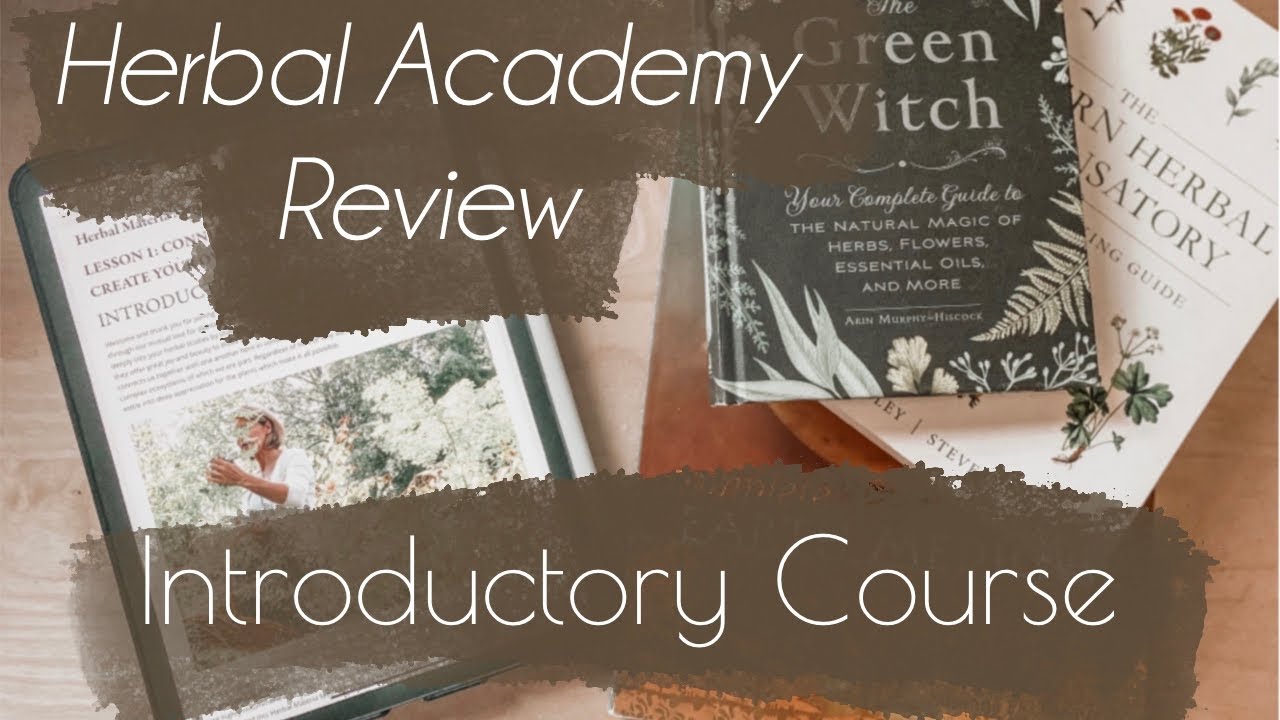
Herbal Academy Review | Introductory Course || Mini Courses
Review of the Herbal Academy
Visit Herbal Academy


#2 Online Herbalist Certification School

herbalist course online

School: Chestnut School of Herbal Medicine

Flagship Program: Herbal Immersion Program
Cost: $2999
Payment Plans: $167 x 20

Other Programs:

Herbal Medicine Making
Cost: $599
Payment Plans: $119 x 6

Foraging: Edible Medicinal and Wild Herbs
Cost: $999
Payment Plans: $99 x 12

Visit Chestnut School of Herbal Medicine

Intro to Chestnut School of Herbal Medicine

Online Herbal Immersion Program

Chestnut School of Herbal Medicine Review

Overall
7.5
Pros
All online
Flagship program: Herbal Immersion Program
cons
No live lectures

Herbal Immersion Program

Welcome to the Program

  • Introduction and Welcome Tour
  • Success with Online Learning: Strategies for Continued Inspiration

Module 1: Foundations in Herbalism

  • Cultivating Relationships with Healing Plants
  • Introduction to Botany: Plant Classification, Scientific Names and Key Terms
  • Botany: Floral and Reproductive Parts, Tour of Floral Diversity
  • Botany: Leaf and Vegetative Terminology
  • Introduction to Five Common Plant Families
  • Introduction to Herbal Actions
  • Guidelines to Foraging and Wildcrafting
  • Native American Plant Gathering Practices with Felicia Cocotzin Ruiz
  • Spring Plant Walk in the Appalachian Mountains
  • Introduction to Medicinal Preparations
  • Harvesting and Drying Herbs
  • Edible Flowers
  • BONUS LESSON: Poisonous Plants and Notable Constituents
  • BONUS LESSON: Foraging Self-Care, Precautions, and First Aid
  • Interactive Review of Plant Classification and Key Botanical Terms
  • Interactive Review of Vegetative Terms and Leaf Terminology
  • Interactive Review of Floral Terms and Five Common Plant Families
  • Botany and Plant Families Review with Marc Williams, Part 1
  • Botany and Plant Families Review with Marc Williams, Part 2
  • Botany and Plant Families Review with Marc Williams, Part 3

Module 2: From the Ground-up: The Nitty-Gritty of Soil and Organic Gardening, Part 1

  • Principles of Organic Gardening
  • Planning Your Dream Garden: Design, Pathways, Mulching, Polycultures, and Maximizing Yields
  • Growing Healthy Soil (Which In Turn, Grows Healthy Plants)
  • Understanding and Building Soil Fertility: Plant Nutrients, Amendments, and Fertilizers
  • Botanical Garden Allies: Nitrogen-Fixers, Cover Crops, and Dynamic Accumulators
  • Step-by-Step Guide to Creating a New Garden Bed with Tilling
  • Container Gardening, Part 1: Vessels, Soils and Herbs
  • Container Gardening, Part 2: Wetland Medicinals

Module 3: Common Useful Garden Weeds – the Bounty that Grows in Between

  • Daylily – Hemerocallis fulva
  • Lamb’s Quarters – Chenopodium album
  • Chickweed – Stellaria media
  • Violet – Viola spp.
  • Purple Dead Nettle – Lamium purpureum
  • Creasy Greens – Barbarea verna and B. vulgaris
  • Garlic Mustard – Alliaria petiolata
  • Dandelion – Taraxacum officinale
  • Cleavers  – Galium aparine
  • Yellow Dock  – Rumex crispus
  • Japanese Honeysuckle – Lonicera japonica
  • BONUS LESSON: The Magic and Bounty of Wild and Weedy Herbs and Foods
  • Interactive Review: Early Spring Foraging
  • Interactive Review: Spring Foraging
  • Interactive Review: Summer Foraging
  • Interactive Review: Late Summer Herbs
  • Natalie Bogwalker’s Review of the Wild Herbs
  • Botany Review with Marc Williams: Common Edible Plants, Part 1
  • Botany Review with Marc Williams: Common Edible Plants, Part 2

Module 4: Plant Propagation

  • Special Strategies for Germinating Herbs: Stratification, Scarification, and Light-Dependent Germination
  • Preparing Seed Trays and Sowing Seeds
  • Soil Blocks: the Container-less Container
  • Bottom Heat for Enhancing Germination
  • Root Division
  • Stem Cuttings
  • Layering
  • Seed Saving of Medicinal Herbs

Module 5: Tonic Herbs and Adaptogens

  • Introduction to Adaptogens, Alteratives and Tonic Herbs
  • Gotu Kola – Centella asiatica
  • Tulsi – Ocimum tenuiflorum
  • Nettles – Urtica dioica
  • Milky Oats – Avena sativa
  • Astragalus – Astragalus propinquus
  • Ginseng – Panax quinquefolius
  • Hibiscus – Hibiscus sabdariffa
  • BONUS LESSON: Burdock – Arctium lappa and A. minus

Module 6: From the Ground-up: The Nitty-Gritty of Soil and Organic Gardening, Part 2

  • Introduction to Permaculture
  • Building and Nourishing a Compost Pile
  • Composting Leaf Mold
  • Organic Pest and Disease Management
  • Season Extension Tips and Tricks
  • Woodland Cultivation of Medicinal Herbs
  • Preparing Homemade Potting Soil: Our Favorite Recipe

Module 7: Herbs for the Immune System

  • Introduction to Immune Stimulants, Immunomodulators and Antimicrobials
  • Boneset – Eupatorium perfoliatum
  • Spilanthes – Acmella oleracea
  • Echinacea – Echinacea purpurea
  • Goldenseal – Hydrastis canadensis
  • Bee Balm – Monarda didyma and Monarda fistulosa
  • Calendula – Calendula officinalis
  • Elderberry – Sambucus nigra

Module 8: Introduction to the Digestive System: Herbal Actions and Nutrition

  • Introduction to Bitters, Astringents and Carminatives
  • Foundations of Nutrition Part 1: Whole Foods, Organic Foods and GMOs
  • Foundations of Nutrition Part 2: Macronutrients, Fiber, and Intestinal Flora
  • Foundations of Nutrition Part 3: Vitamins and Minerals
  • Foundations of Nutrition Part 4: Bioflavonoids in Food and Herbs
  • Foundations of Nutrition Part 5: Food Allergies and Intolerances

Module 9: Herbs for the Digestive System

  • Anise Hyssop – Agastache foeniculum
  • Meadowsweet – Filipendula ulmaria
  • Fennel – Foeniculum vulgare
  • Mint – Mentha spp.
  • Chamomile – Matricaria recutita
  • Lemon Balm – Melissa officinalis
  • Basil – Ocimum basilicum

Module 10: Herbs for the Respiratory System

  • Introduction to Expectorants, Demulcents and Anticatarrhals
  • Elecampane – Inula helenium
  • Mullein – Verbascum olympicum
  • Marshmallow – Althaea officinalis
  • Yarrow – Achillea millefolium
  • Goldenrod – Solidago spp.

Module 11: Herbs for the Nervous System

  • Introduction to Nervines, Hypnotics, Anxiolytics, Antidepressants and Analgesics
  • Valerian – Valeriana officinalis
  • Skullcap – Scutellaria lateriflora
  • Passionflower – Passiflora incarnata
  • California Poppy – Eschscholzia californica
  • Mimosa – Albizia julibrissin
  • Rose – Rosa spp.
  • Vervain – Verbena officinalis

Module 12: Herbs for the Female Reproductive System

  • Introduction to Uterine Tonics, Emmenagogues, Hormone Balancers and Uterine Antispasmodics
  • Ecology of Estrogen in the Human Body: Xenoestrogens, Phytoestrogens and Estrogen Metabolism
  • Black Cohosh – Actaea racemosa
  • Vitex – Vitex agnus-castus
  • Motherwort – Leonurus cardiaca
  • Red Raspberry – Rubus idaeus

Module 13: Medicine Making – Core Preparations

  • Infusions and Decoctions
  • Tinctures
  • Herbal Honeys and Syrups
  • Herbal Vinegars
  • Flower Essences

Module 14: Food as Medicine – Bringing Healing Herbs into the Kitchen

  • Infused Culinary Oils
  • Infused Culinary Vinegars
  • Fire Ciders: Spicy Medicinal Vinegars
  • Goo Balls: Herbal Nut and Fruit Confections
  • Compound Culinary Butters
  • Herbal Finishing Salts
  • Herbal Sauces
  • Wild Herbal Pestos, Hummus and Pâté
  • Medicinal Mushroom Concoction
  • Herbal Popsicles, Iced Teas and Granitas
  • Herbal Bone Broth/ Immune Tonic Soup
  • Herbal Meads, or Honey Wines
  • Herbal Bitters
  • Herbal Shrubs: Sweet and Sour Fruit Infusions
  • Fancy Pants Ice Cubes
  • Herbal Simple Syrups
  • Cocktails and Mocktails

Module 15: Topical Herbal Preparations and Natural Body Care

  • Infused Oils and Salves
  • Compresses and Poultices, Herbal First Aid
  • Introduction to Hydrotherapy
  • Introduction to Aromatherapy
  • Floral Skin Serum
  • Body Butter
  • Salt Scrubs
  • Bath Salts
  • Aromatherapy Sprays
  • Aromatic Massage Oils

Module 16: Herbal Livelihoods/Applying the Knowledge

  • The Heart of Livelihoods: Business Ethics and Inspiration
  • Herbal Livelihoods
  • The Nitty-Gritty of Business: Marketing, Websites, Social Media, Insurance, Business Entities, Legalities of Herbalism, and Pricing
  • Herbal Products Businesses: An Introduction to Current Good Manufacturing Processes (cGMPs) and Product Labeling Requirements
  • Further Learning and Networking: Organizations, Media, Conferences, and Clinical Programs
  • Connecting to Your Life’s Purpose with Chuck Marsh
  • Permaculture in Action: Spotlight on Joe Hollis’ Mountain Gardens and Paradise
  • Amy Hamilton of Appalachian Seeds and Nursery
  • Running a Mobile Free Herbal Clinic with Lorna Mauney-Brodek
  • Larken Bunce of Vermont School of Integrative Herbalism
  • Dr. James Duke of the Green Farmacy Gardens
  • Asia Suler of One Willow Apothecaries
  • History of Earthaven Ecovillage
  • Permaculture Principles with Chuck Marsh
  • Kauai Farmacy Gardens: Bioregional Farm-to-Apothecary
  • Charlotte Herbal Accessibility Project: Interview with Brandon Ruiz
  • Marc Williams of Plants and Healers International & Botany Everyday
  • Ayo Ngozi Drayton of The Creative Root
  • Leah Penniman of Soul Fire Farm
  • Meshell Orozco of Brambleberry Botanicals
  • Ellenie Cruz of Ac3nsion Art

Module 17: Siting Reference Guide: Regional Profiles and Habitat Lists

  • Arid Lowland Climates with Monica Rude
  • Cold Temperate Climates with Deb Soule
  • Arid Mountainous Climates with Kathi Keville
  • Rocky Soils in Mid-Continental Climates with Steven Foster
  • Subtropical Climates with Emily Ruff
  • Mediterranean Climates with Richo Cech
  • Woodland Medicinals: Chinese and Eastern North American Herbs with Joe Hollis
  • Wetland Herbs
  • Shade Herbs
  • Arid Climate Herbs
  • Hot & Humid Climate Herbs

BONUS Module: North American Herbal History and Traditions

  • Introduction
  • A History of European & North American Colonial Herbal Medicine
  • A History of Native American Herbal Medicine
  • A History of Black Herbal Medicine from Africa to North America
  • Connecting With Your Own Herbal Lineage & Honoring Other Traditions
  • Black Herbal Elders with Lucretia Van Dyke
  • Herbal Accessibility: Uniting Culture & Community Gardens

Course Hours

  • Medicine Making – 150 hours
  • Botany and Plant Identification – 75 hours
  • Materia Medica (Herbal Therapeutics) – 250 hours
  • Herbal Actions – 40 hours
  • Permaculture – 10 hours
  • Nutrition – 75 hours
  • Herbal Safety: Drug-Herb Contraindications and Potential Side Effects – 20 hours
  • Soil Science: Plant Nutrients, Amendments, Composting, and Soil Flora – 30 hours
  • Foraging and Ethical Wildcrafting – 150 hours
  • Organic Herb Cultivation – 150 hours
  • Herbal Business Basics: Marketing, Legalities, and Inspiration – 50 hours

Total Hours: 1000

Chestnut School of Herbal Medicine Review

Coming soon

Visit Chestnut School of Herbal Medicine


#3 Online Herbalist Certification School

herbalist school

School: Pacific Rim College

Flagship Program: Community Herbalist
Cost: $2799 ($3500 CAD)
Payment Plans: $260 x 12

Other Programs: Home Herbalist
Cost: $890
Payment Plans: $160 x 6

Visit Pacific Rim College

Intro to Pacific Rim College

Introducing 2 New Online Programs, Home & Community Herbalism

Pacific Rim College Review

Overall
5
Pros
All online
Flagship program: Community Herbalist
Live lectures
Cons
Runs in cohorts, you can’t start any time
Not as in-depth as Herbal Academy
Costly for a 15 week program

Herbal Workshops

Herbal Workshops are presented by leaders in the field of Western Herbal Medicine, many of whom who have published books and articles and are internationally-renowned speakers.

Prerequisites: – –    Hours: 24

Natural Emergency Medicine

In this course students learn to apply natural remedies – Acupuncture, Herbal Remedies, Homeopathics and others – to emergency situations both in the clinic and outside. Students learn to recognize and diagnose emergency conditions using biomedical techniques and provide effective therapy combining techniques learned in BMS221 and knowledge of natural healing remedies.

Prerequisites: – –    Credits: 1    Hours: 12

Practical Herbal Pharmacy

This practical course provides students with an education in the preparation of various herbal products that are required to be effective in the dispensary. The products that are made include Infusions, Tinctures, Syrups, Capsules, Flower Essences, Infused Oils, Herbal Baths, Liniments, Poultices, Fomentations, Salves, Balms and Creams. Each class focuses on one particular product and instructions is given about the use and effectiveness of each preparation. Students take home the products that they make in this class to use and experience themselves. Students are required to complete a practical presentation in class on a product of the student’s choice. This is an ideal class for anyone interested in making their own herbal remedies!

Prerequisites: – –    Credits: 3    Hours: 45

Backyard Gardening

In the age of financial uncertainty, gardening skills are a sought after commodity. This comprehensive and practical 30-hour introduction to backyard gardening in the Pacific Northwest will provide beginners with the requisite skills, knowledge, and support to begin their own organic growing projects at home. At the end of the program participants understand plant growth requirements and how to provide them for a variety of annual and perennial plants, including food and medicinal crops; the role of a living soil system in growing healthy plants and know how to feed the soil using organic methods; basic gardening methods, including seeding, planting, watering, mulching, cold protection, pruning and container gardening; the role of beneficial species in suppressing pests and disease and know how to manage common insect, weed and disease problems organically; and how to extend and share the harvest.

Prerequisites: – –    Credits: 2    Hours: 30

Herbal Walk/Identification

This class gives students the opportunity to learn Herbal Medicine by exploring living plants as they exist in the natural world. Students learn proper identification of medicinal plants and the types of environments in which they naturally grow.

Prerequisites: – –    Credits: 1    Hours: 12

Materia Medica for Community Herbalists

Students build relationships with the plants that they will be using to create medicines for their patients. During the classes, students use organoleptic skills to experience the herbs, which includes tasting, smelling and observing teas, tinctures, oils and raw plant material.  This course examines the following herbs: Arnica, Ashwaghanda, Bearberry, Black Cohosh, Buchu, Calendula, Cayenne, Chamomile, Cleavers, Comfrey, Cramp bark, Dandelion root/leaf, Echinacea, Elderflower/berry, Elecampane, Fennel, Garlic, Ginger, Goldenrod, Hawthorn berry/leaf, Holy basil, Horse chestnut, St John’s wort, Lavender, Lemon balm, Licorice, Marshmallow root/leaf, Meadowsweet, Milk thistle, Mullein, Nettle root/leaf, Oat straw/seed, Oregon grape, Passionflower, Peppermint, Plantain, Raspberry leaf, Red cedar, Reishi, Rosemary, Sage, Siberian ginseng, Skullcap, Slippery elm, Thyme, Turmeric, Valerian, Vitex, Willow, and Yarrow.

Prerequisites: – –    Credits: 3    Hours: 45

Energetics of Herbal Medicine

Systems of energetics are ways of describing and classifying patterns of disease and properties of plants that provide a basis for herbal therapeutics. In this course, we examine the energetic systems that inform traditional western herbalism. These include the intuitive approach to plant medicine that underlies all energetic systems, the four elements of Greek and Egyptian medicine, the four humours of European medicine and the insights of the Physiomedicalist and Eclectic physicians of the nineteenth century. Students learn to translate the principles of these systems to a contemporary context and apply them in their practice.

Prerequisites: – –    Credits: 3    Hours: 45

Introduction to Herbal Medicine

All cultures around the world have used plants as medicines either as their sole health care modality, or as a complementary or alternative option. This class explores the history of plant use in various cultures and examines the similarities and differences of their systems of healing.

Prerequisites: – –    Hours: 6

Herbal Therapeutics

Students learn to create customized treatment plans for patients. This includes the use of herbal preparations and diet and lifestyle counselling. Students also learn how to determine the effectiveness of treatment and the limitations of herbal medicine therapeutics within these conditions.

Prerequisites: – –    Hours: 30

Business Development

This course will highlight the opportunities available to graduates of the Community Herbalist Program within the community.The course is broken up into case study analysis, business plan concepts and a presentation. The case study analysis consists of showcasing “community” herbalists offering Herbal Medicine services from previous CHP students and/or folk herbalists in the community. This analysis will offer students ideas for future non-clinical business plans and goals. Students will then learn business plan concepts including business description, market analysis, marketing planning and financial planning. Presentations will be based off of future business plans and projects that students wish to venture into after completion of the Community Herbalist Certificate program, including, but not limited to, farm markets, herb retail shops, growing medicinal plants and matriculating into the Diploma of Phytotherapy program to become a qualified Clinical Herbal Practitioner.

Prerequisites: – –    Hours: 9

Introduction to Nutrition

The course introduces students to the foundations of holistic nutrition. The roles of macronutrients are discussed along with where to source them in the diet and key strategies for optimizing absorption and assimilation. This course outlines dietary approaches for addressing inflammatory conditions, consider basic supplementation protocols, and introduce medicinal foods.

Prerequisites: – –    Credits: 1    Hours: 12

Pacific Rim Community Herbalist Review

Coming soon

Visit Pacific Rim College

Frequently Asked Questions

What qualifications do you need to become a herbalist?

There are no formal qualifications needed to call yourself a herbalist as it’s an unregulated industry.

To become a licensed herbalist, however, one must acquire a variety of qualifications. These qualifications can vary depending on the region that an individual is applying for.

How long does it take to become a certified herbalist?

Each herbalist school offers very different timelines for its courses. Timelines can range from 1 month to 1 year, or more.

Can you get a degree in herbal medicine?

Yes, for example, this school offers a bachelor’s degree in herbal medicine. First, check with your region to make sure the degree is accepted.

Where can I study to be an herbalist?

Studying online to become a herbalist is most popular. Arguably, The Herbal Academy provides the most value for your money.

Time To Make A Decision

I sincerely hope that I have provided enough information here to assist you in making your decision on choosing 1 of the 3 highest quality herbalist Certification schools available online.

If you have any questions or feel there are gaps in information, and you would like me to add more information, please let me know in the comment section below, I will gladly try to help you out.

Detailed reviews of other areas of certification:

Online Life Coach Certification

Online Health Coach Certifications

Holistic Nutrition Certifications

Business Coach Certifications

Online Meditation Teacher Certifications

CBD Coach Certification

Have questions regarding any of these online herbalist certification schools?

If you have any questions regarding any of the information I have presented here regarding any of these online herbalist certification schools feel free to contact me 🙂

how to validate someones feelings

How To Validate Someone’s Feelings (Without Agreeing)

Learning how to validate someone else’s feelings is one of the most important skills the majority were never taught. Emotional validation is imperative and foundational to a healthy emotional relationship with yourself and others. It’s also at the forefront of feeling worthy.

What Exactly is Emotional Validation?

When you emotionally validate yourself or another you’re accepting the internal experience. You may not understand the experience but you understand the experience is valid based on how you or they are thinking and feeling.

It’s important to note that all of our experiences are created by our unique history, thoughts, beliefs, perspectives, conditioning, and emotions. Why is this important to know? Because this is why we experience what we experience. It’s also why none of us share the exact same experience—it’s why we’re all inherently different.

At the end of the day, you may not see the world the way others do but you also don’t deny their experience, you validate it.

What is Emotional Invalidation?

As you might imagine, emotional invalidation looks the complete opposite of what you just read. You emotionally invalidate yourself or someone else when you deny the emotional experience being had. The message being sent is that you or they shouldn’t feel what’s being felt, it’s not normal.

Invalidation can come across as contradicting, undermining, belittling, minimizing, and judgmental. Think back to a time where you felt any other those while expressing your emotional experience to another and see if you can find why you felt invalidated.

Invalidation can also be seen as a form of gaslighting, making you or them look crazy for what’s being experienced. Why? Because the message being sent is that the experience isn’t justified and illogical.

Any time you try to escape or change your emotions because you’ve judged them as bad, negative, or unwanted—you’ve denied your own experience.

Emotional invalidation is a fast track to an unhealthy or broken relationship with yourself or another.

Why Emotional Validation Can Be Challenging

We Think to Validate is to Agree

This is a common misconception about what it means to validate. One of the simplest ways to change this misconception is to replace the word ‘agree’ with ‘accept’‘.

We’re accepting our own, or another’s, experience as it is, not agreeing with it.

How can we validate someone without agreeing?

You can express validation without agreement by telling someone you understand how they can feel or experience what they are based on what they’ve told you.

If you feel safe enough in their space you can communicate that just because you’ve expressed understanding and validation toward their experience doesn’t mean you agree with their beliefs or perspectives.

We’re Caught Up in Our Own Judgments

We Invalidate Our Own Experiences

If you have a habit of not validating your own feelings and experiences you will surely struggle to do so for another. Like most things, validation always begins with ourselves.

We Listen to Provide Solutions

In my experience, this is probably the most common reason we invalidate someone’s emotional experience, so long as our intent wasn’t malicious. We get so caught up in trying to come up with a solution that we don’t listen deeply.

Many times, our proposed solutions are unwarranted and not asked for yet we still deliver them.

The problem with solutions is that they don’t provide validation, non-judgmental listening and acceptance do.

Examples Of Validating Statements

It’s understandable you’d feel that way.

Yes, that makes sense. I can see why you say that.

I’m sorry you’re having a hard time with this.

It’s perfectly normal that you think that.

Can you tell me more about how you’re feeling?

I can see why you feel…

Examples of Invalidating Statements (Avoid at All Cost)

It’s not that big a deal.

I’m sorry you feel that way. (when it takes the place of an apology)

You could be dealing with far worse problems.

You’re better than that

Don’t stoop down to that level.

You’ll get over it/Get over it

That never happened/You never said that.

You need to calm down.

You’re being dramatic.

You aren’t making any sense.

You’ve upset them again by saying that.

If I were you…

What I usually do for this problem is…

You’ll be OK

Time heals all wounds

How to Validate Someone Who is Angry

Emotional Validation and Holding Space

Emotional validation has a lot of overlap with holding space. Holding space for another is imperative for them to feel safe with you emotionally.

What does it mean to hold space? You create a safe, non-judgmental environment that allows yourself and/or others to be authentic, expressing thoughts and emotions without hesitation or worry.

If you are unfamiliar with what holding space is you can learn how to hold space step-by-step here.

positive psychology coach certification

3 Best Positive Psychology Coach Certifications (2025)

Positive psychology coaching blends science-backed strategies with coaching techniques to help clients build resilience, enhance well-being, and achieve their fullest potential. Whether you’re an aspiring coach or a seasoned professional looking to integrate positive psychology into your practice, earning a certification can provide the skills and credibility needed to make a lasting impact.

With numerous certification programs available, selecting the right one requires careful consideration of accreditation, curriculum quality, and practical application. The best programs offer evidence-based training in strengths-based coaching, mindset shifts, and goal achievement.

In this guide, we’ll explore the top positive psychology coach certifications to help you find the right program to elevate your coaching career and empower your clients.

3 Best Positive Psychology Coach Certifications

Best Value

mindfulness training certification
Visit Website
Read Review

Runner-Up

positive psychology certification 3
Visit Website
Read Review

Pricey

positive psychology certification (2)
Visit Website
Read Review


Compare 3 Of The Best online Positive Psychology Coach Certification Programs

Scroll right to view more columns. If you are viewing from a phone or tablet I recommend rotating into a landscape for the best viewing experience.

school of positive transformation review
positive psychology certification 3
positive psychology certification 2
SchoolSchool of Positive TransformationWholebeing InstitueThe Flourishing Center
Visit WebsiteVisit WebsiteVisit Website
CertificationsPositive Psychology PractitionerPositive Psychology Coaching CertificationApplied Positive Psychology Certification
Help you stand out from the competition✔✔✔
Start Anytime✔
Accredited✔✔✔
ICF CCE Hours09050
Program LengthNo limit, delivered over 12 weeksDelivered over 38 weeks (5 separate courses)Delivered over 36 weeks
Programs Hours150n/a240
Personal Mentorship✔✔
Virtual Classes✔✔✔
Teleclasses
Live Coaching Practice✔✔
Coursework Feedback✔✔✔
Informational Live and Recorded Webinars✔✔
PDF Downloads For Modules✔✔✔
Video Content For Modules✔✔✔
Lifetime Access To Resources✔✔✔
Learn How To Start Your Own Coaching Business✔✔✔
Learn How To Market Yourself✔✔
Private Student Community✔✔✔
Investment (if paid in full)$590$3575 (total of all 5 courses required)$5995
Payment Plan Options$300 x 2
$200 x 3
available upon requestavailable upon request
Read ReviewRead ReviewRead Review
Visit WebsiteVisit WebsiteVisit Website


#1 online Positive Psychology Coach Certification Program

mindfulness training certification

Provider: School of Positive Transformation

Program: Positive Psychology Practitioner

Cost: $590
Payment Plans: $300 x 2 or $200 x 3

25% OFF Coupon Code:
RESOLVE2023

Introduction to The Program

Positive Psychology Course – Become a Positive Psychology Practitioner

Founder, Dr. Ivtzan, Goes More In-Depth Into Positive Psychology

What is Positive Psychology - and why do I Love its Science and Practice

25% OFF Coupon Code:
RESOLVE2023

Visit School of Positive Transformation

School of Positive Transformation Review

Overall
9
Pros
All online
Accredited
Certified Positive Psychology Practitioner
Incredible value for the price (save $3000+ compared to other programs)
150 hr program
Taught by 12 different world-experts in positive psychology
Scientific and evidence-based
Rock-solid curriculum
No waiting, start anytime
Full lifetime access to online learning material
Private student forum
30-Day money back guarantee
Cons
No live practice
No mentoring

Training Materials

  • 40+ videos
  • 30+ evidence-based guided meditation scripts
  • 30+ exercises and activities, and downloadable audio meditations, handouts, and worksheets.
  • These materials are divided into 30 teaching sessions, each session incorporates videos, exercises, and meditation practice.
  • The sessions make a comprehensive course (see full curriculum below) and would offer you all that you need to deliver inspiring and responsible meditation sessions.

Positive Emotions and Love 2.0

This module not only showcases some of the latest scientific work in the field of positive psychology from my own and others’ laboratories, but it also highlights practical applications of this science that you can put to use immediately. Together we will “lift the hood” of positive psychology to discover the tiny engines that drive it. Positive emotions, often subtle and always fleeting, are remarkably consequential – psychologically, socially, and physically. Module topics include creativity and resilience, love and connection, flourishing, and physical health. By taking this module, you will become conversant with leading-edge theories and evidence directly from the PEP Lab (Positive Emotions and Psychophysiology Laboratory), including work that measures the benefits of positive emotions for your heart and your immune system.

Session 1: Positive Emotions

This session will introduce you to the science of emotions, ten distinct positive emotions, and the Broaden-and-Build Theory of positive emotions. You will encounter evidence that supports the role of positive emotions in expanded awareness, flexible and creative thinking, resilience, and trajectories of personal growth.

Session 2: Positive Connections

This session will introduce you to the science of high-quality social connections and Positivity Resonance Theory. You will encounter evidence that underscores the impact of shared positive emotions, mutual care and concern, and the behavioral and biological synchrony of relationship quality with both mental and physical health.

Session 3: Upward Spiral of Lifestyle Change

This session will introduce you to the science of behavior change and the Upward Spiral Theory of Lifestyle Change. You will encounter evidence that underscores the centrality of emotions and nonconscious motives in driving behavioral changes that have lasting benefits for well-being.

The Power of Character Strengths

You are a person of character. In fact, each of us is. Modern research shows that you have within you, to varying degrees, 24 strengths of character that make you “uniquely you.” These strengths include bravery, curiosity, gratitude, fairness, love, perseverance, self-regulation, and hope, to name a few. Imagine that! You have all of these qualities of goodness and strength within you. Some of these strengths may have already developed and flowered within you, and
you are now expressing them strongly in your work and in your relationships. Other strengths may be dormant, waiting for you to notice them or to refocus your attention upon them. However, some strengths may have never gotten any deliberate attention from you and are now wilting away.

Hundreds of research studies over the last few years have uncovered the many benefits associated with the character strengths such as resilience, life meaning, work productivity, stronger relationships, better health, less depression and stress, and greater happiness.

This module will help you understand what character strengths are, how they differ from other kinds of strengths such as your abilities, skills, and interests, and how to develop them to make the most of your life. There will be an emphasis on offering highly practical tools, grounded in science, that can be used immediately.

Session 1: What are Strengths, Why Do They Matter, and How Do You Use Them?

Your character strengths are at the center of your identity. They give you an immediate answer to life’s complex question: Who are you? They help you to not only understand yourself but to express yourself fully and authentically in your relationships, work, and community. We will explore how all of us can begin to challenge our negative mindset, overcome many of our blind spots, and begin using our best qualities to create an optimal life.

To get the most out of this session (and those that follow), it is recommended you take the free, validated VIA Survey that measures your character strengths. This is widely considered the most popular and useful test in the field of positive psychology. It will take you approximately 15 minutes to complete and can be found at www.viacharacter.org

Session 2: Your Unique Signature Strengths

One of the strongest activities that exist in the field of positive psychology involves the awareness and use of your highest character strengths, also referred to as signature strengths. Using your best qualities in a thoughtful way has been shown to boost happiness and decrease depression. This session will help you understand and appreciate your signature strengths. Part of the focus will be on how to develop a “strengths practice” in your life.

Session 3: Character Strengths – Your Pathway to Fulfilment and Well-Being

Character strengths can be developed. We will bring this new research discovery to life by exploring the many ways you can use your 24 strengths. A handful of strengths have also been shown to be particularly connected with happiness and others with fostering positive relationships. We will explore some of these strengths and offer tips for implementing them in your daily life

Positive Education: Transforming Children, Parents, and Schools

Positive education is an applied science that weaves contemporary research from positive psychology into educational practice with the aim of supporting student wellbeing. Join me for this module to explore the growth of both science and practice in positive education. We will explore how this field is spreading across the world and will discuss and practice three distinct PPIs (Positive Psychology Interventions) that are having a positive impact on student wellbeing and academic outcomes: gratitude, mindfulness, and strengths. Importantly, we will consider the ways in which these three PPIs can support the mental health and relational wellbeing of teachers and school leaders.

Session one: Introduction to Positive Education

Although school-based mental health interventions have existed since the early 1930s, the newer field of positive education has extended the aims of such interventions beyond the reaction and prevention of ill-being (e.g., reducing student stress, bullying, and anger management) to encompass the promotion and enhancement of wellbeing (e.g., building hope, pro-social skills, and happiness). This session will explore the broad range of factors that have fostered the
rise of positive education, including rising rates in youth mental illness across the globe, calls from international agencies for a broadening of the purpose of schools, and the evidence base showing a link between wellbeing and academic outcomes.

Session two: Bringing an Apple to School – The Power of Gratitude

Gratitude refers to our ability to notice and appreciate the good things in life. Cicero (106-43BC) is quoted as saying “Gratitude is not only the greatest of all virtues but the parent of all virtues.” Two decades of research have shown that gratitude boosts the wellbeing of both the giver and receiver of gratitude and helps to build happy, supportive relationships. Research also shows that gratitude can be cultivated through practice which makes it ideal for teaching in schools. In this session, we will explore the implementation of gratitude-PPIs in schools and review concrete examples of how schools are supporting students, teachers, and leaders to develop ‘an attitude of gratitude.

Session three: Teaching Stillness in Schools – The Role of Mindfulness and Meditation

Schools are busy, stressful places where positive education is making inroads through the teaching of mindfulness and meditation techniques (e.g., transcendental meditation, Tai chi, yoga). Mindfulness is defined by John Kabat-Zinn as a state of present-moment awareness that emerges through paying deliberate attention, without judgment, to one’s moment-by-moment experiences. Teachers have observed that, after practicing mindfulness, students are more relaxed and settled in classes that foster a positive classroom environment. Students themselves report reductions in stress after engaging in mindfulness or meditation. In addition to the benefits for well-being, some research has also shown that teaching mindfulness and meditation to students enhance pro-social
skills and compassion for others. However, although research has shown a positive link between mindfulness and academic outcomes, the overall evidence is inconclusive and further research needs to be conducted.

Resilience and Post-traumatic Growth: Pathways to Success When Facing Adversity

Our resilience is far more than our ability to be a “rugged individual” with the right personal qualities who bounce back after adversity. It is just as much about being a “resourced individual” with the biological, psychological, social, and even physical supports we need to cope with crises when they occur. In this inspiring, story-filled, and research-based module, Dr. Ungar will explore the concepts of resilience and post-traumatic growth, borrowing from his latest book Change Your World: The Science of Resilience and the True Path to Success. Dr. Ungar will draw on examples from both his clinical work and research around the world to show that the processes of navigation and negotiation are at the heart of resilience. He will explain how we can improve our lives and find more meaning through the everyday heroics of coping with complex stressors while making use of 12 factors that are critical to success. Integrating the latest research from studies of positive development, mindfulness, and other aspects of personal development, along with studies of the social and physical determinants of well-being, Dr. Ungar will offer a culturally sensitive interpretation of what resilience means to people from diverse backgrounds living in diverse communities.

Session 1: What is Resilience? Maintaining Our Capacity to Cope During Times of Change and Challenge

Which factors matter most to coping under stress always depends on the kind of stress we experience and the quality of the personal, social, and physical resources that we have available. In this humorous and thought-provoking session, Dr. Ungar explores the meaning of resilience and how the concept can be used to improve our lives. He explains resilience as the dual processes of navigation to a dozen resources we need to succeed, and our ability to negotiate for these resources to be provided to us in ways that we experience as most helpful. A number of innovative strategies to improve resilience will also be shared that can be used at home, in our workplaces, and in our communities.

Session 2: What is Post-traumatic Growth? The Potential for Traumatic Events to Produce a Meaningful Life

Many individuals not only cope well with complex stressors but also find through the experience opportunities for growth. While exposure to potentially traumatizing events can be debilitating, burdening us emotionally and preventing optimal physical and mental functioning, there are many examples of people showing post-traumatic growth (PTG) who have used negative life experiences to find meaning through the heroics of everyday living. Using examples of individuals who have successfully coped with trauma, and the research on both post-traumatic stress disorder (PTSD) and PTG, Dr. Ungar will discuss PTG as one of seven ways individuals adapt to adversity, whether acute or chronic and the resources required to support people to learn from their pasts and realize their potential.

Session 3: Helping those Who Help Nurture and Maintain Their Resilience

Sustaining our resilience as professional helpers can be a challenge during times of change. This lecture shifts the focus from helping others to building and maintaining the wellbeing of those whose jobs are emotionally and spiritually challenging. Strategies to avoid burnout and maintain a career and life resilience will be discussed that can be used when stressors pile up at home and at work. The twelve factors discussed in Session 1 will be revisited, this time in relation to their impact on the capacity of helpers to succeed and the culturally nuanced ways that each factor supports positive development. Finally, Dr. Ungar will talk about “vicarious resilience,” the positive impact we experience as helpers when we nurture resilience in others.

Happy Together: How Positive Psychology Can Help Improve Relationships

We will explore how the science of positive psychology can help us strengthen our relationships. While the concepts we discuss can be applied to all kinds of relationships —those with our friends, family members, significant others, and business colleagues — many of the examples we use will come from our work on romantic relationships.

The way relationships are often portrayed in popular culture does a disservice to many. For example, in fairy tales and films, lasting love seems to happen without any effort. However, in real life, research shows that it is healthy habits that lead to long-term love. In this module, based on our book, Happy Together, we will discuss how to practice using the principles of positive psychology to create thriving relationships. We will discuss the importance of finding and feeding the good in yourself and others rather than focusing on problems. In other words, we will focus on what is going well in your relationships, rather than on what is wrong. While sometimes it is necessary to work on fixing problems, many of us overwhelmingly focus our attention on avoiding and eradicating the things we do not like in others. We need to adopt a more balanced approach. It is equally as important to focus on seizing opportunities and cultivating what we do want in our relationships. In this module, you will develop key habits that will enable you to build stronger bonds and a love that lasts by learning the difference between a healthy and an unhealthy passion, understanding the importance of practicing positive emotions and savoring, and identifying your strengths and
those of your partner and applying them to your relationship.

Session 1: Is Love all you Need?

How do you get to live happily ever after? We will talk about the philosophy and psychology behind strong relationships and love that lasts. We will examine some of the characteristics of a healthy relationship. We will begin with ancient wisdom by discussing what Aristotle had to say about cultivating good friendships and how we can apply his ideas towards building a love that lasts. We will also talk about the importance of passion. Positive psychology research shows that is not just how much passion you have that is important but having the right kind. The wrong kind of passion can actually be damaging to
a relationship, whereas the right kind can help it to thrive. We will discuss how to identify and promote a healthy passion and explore fun ways to do so.

Session 2: The Importance of Practicing Positive Emotions & Slowing Down to Savor Experiences Together

We will discuss how positive emotions not only feel good, they are good. While some positive emotions are fleeting, they can have long-term consequences in our relationships by making us more resilient and open to new experiences. Positive emotions are not merely indicators that things are going well; they can also help us take actions that will enable the relationship to thrive. Most couples experience a high frequency of positive emotions early on in the romantic relationship but tend to experience fewer as their relationship develops. We will discuss ways to actively cultivate positive emotions in ourselves and towards our partners. Additionally, we will learn how to slow down to practice the science of savoring to help us leverage these uplifting moments and experiences in all our relationships.

Session 3: How Seeking out Strengths Together Can help us Stay Happy Together

Positive psychology researchers have identified twenty-four unique strengths that have been valued across time and cultures, including creativity, kindness, zest, and love of learning. We all have a fascinating configuration of strengths– which, along with our personalities, experiences, and upbringing, are part of what makes us unique. At the beginning of any relationship, it is easy to see strengths in one another. In fact, these strengths are often what initially attracts us to
that person. However, what begins as intriguing differences often seem to become annoying deficits as time passes. We will therefore emphasize the importance of remembering to see our friends and significant others through the lens of strengths. To do this, we will learn how to identify our strengths and those of others, and then practice using these in our relationships to build stronger bonds.

The Need for Altruism to Build a Happier Life and a Better World

Being motivated by altruism and compassion is the best way to accomplish a twofold benefit for others and for ourselves. On a personal level, this leads to a win-win situation. On a global level, altruism is the only unifying concept that allows the demands of short-term needs to be reconciled with the search for happiness and respect for future generations. Research in psychology has refuted the idea of a universal selfishness, while neuroscience has shown that compassion can be trained as a skill. The science of evolution is increasingly recognizing the importance of cooperation. There are ways to overcome contrary
forces (extreme individualism, narcissism, violence, etc.) and to bring about a more compassionate society through cooperative education, caring economics, sustainable harmony, and by increasing our consideration for other species and our environment.

Session 1: Altruism as a Win-Win Situation – From Personal Experience to a Global Level

We have an extraordinary potential for goodness, but also an immense power to do harm. Any tool can be used to build or to destroy: it all depends on our motivation. Therefore, it is all the more important to foster an altruistic rather than a selfish motivation. Thinking “me, me, me,” all day long makes one miserable and also makes everyone around us miserable. Conversely, altruistic love and compassion are well received by others and have also been found to be prominent among positive emotions. On a global level, we are facing immediate challenges to our ability to survive and prosper, middle-term challenges to our ability to flourish in life, and long-term challenges through the damage we are causing our environment, which will lead to great suffering among future generations. We will attempt to show that altruism (having more consideration for others) is the only concept that will enable civil society members, social workers, investors, politicians, and environmental scientists to sit around the same table and find ways to bring about a better world.

Session 2: In Which We Show That True Altruism exists and could be Enhanced.

There has long been an assumption in psychology, philosophy, economy, and evolutionary sciences that humans are essentially selfish. However, over the last twenty-five years, new research and insights have shown that genuine altruism does exist and can be extended beyond our kin through a sense of global concern and responsibility for our fellow human beings and for other species. Nevertheless, if we want altruism to play a major role in our lives, we must cultivate it individually while initiating changes in our cultures. Research in neuroscience has shown that training induces restructuring in the brain at both functional and structural levels. This is what happens when one develops altruistic love and compassion through training. Over generations, cultures, and individuals mutually influence each other. The evolution of culture is, however, faster than that of genes. One can thus conceive of a much-needed evolution towards more cooperative and altruistic societies.

Session 3: Dealing with Contrary Forces and Considering Solutions and Interventions.

To bring about a more compassionate society, we need to find proper antidotes to contrary forces such as excessive individualism, narcissism, devaluing others, instrumentalizing other species, violence, and institutionalized selfishness in corporations and institutions. This requires enhancing cooperation in all fields of life, including education, promoting “sustainable harmony”, and remaining within the planetary boundaries that allow humanity to safely prosper without being transformed into a hothouse. Altruism thus appears to be a factor determining the quality of our existence, now and in the future, and should not be relegated to the realm of noble utopian thinking. We must have the perspicacity to acknowledge this and the audacity to verbalize it.

Mindfulness in Positive Psychology: The Adventure of Meditation and Flourishing

Mindfulness meditation is one of the most popular interventions in psychology, interest in which has grown year after year. Positive psychology is the fastest developing branch of psychology, whose expanding journey into the investigation of human flourishing has attracted great interest. What happens when these two transformative disciplines are brought together?

In this module, you will learn about fascinating points of convergence between mindfulness and positive psychology, including both theoretical questions and exciting practical exercises. We will explore various mindfulness programs focused on facilitating positive transformation, such as meaning, compassion, positive emotions, and gratitude. These programs are flourishing-focused, thereby embodying the spirit of positive psychology.

The combination of mindfulness and positive psychology enhances the positive change each of these areas offers separately, providing you with an effective and practical approach to positive transformation.

Session 1: What is Mindfulness and why is it a beneficial wellbeing practice?

In this first session, we discuss mindfulness and its relevance to psychological wellbeing. We define mindfulness, explore its mechanisms, and evaluate ways in which it changes our relationship with ourselves and the world around us. We explore a number of research studies that show the power of presence, which is offered by the practice of mindfulness. Finally, we contemplate the difference between the formal and informal practice of mindfulness, while discussing ways for us to apply both and enjoy the benefits.

Session 2: Mindfulness in Positive Psychology – The Mindfulness-Based Flourishing Program

In this session, we discuss the relationship between mindfulness and positive psychology. Why is it that mindfulness, up until now, has been implemented in the West almost exclusively within the context of psychological deficiencies (stress, anxiety, depression)? How can we transform mindfulness research and teaching so that it also covers the way mindfulness increases positive attributes such as happiness, compassion, resilience, and gratitude? As part of this session, we explore the Mindfulness-Based Flourishing Program (MBFP), which is a positive mindfulness program. This is an 8-week program combining mindfulness with self-awareness, positive emotions, self-compassion, strengths, positive relationships, and other aspects of positive psychology. The program has been researched extensively and has yielded excellent results in improving psychological and physiological wellbeing. As part of this session, I will discuss the theoretical concept of the “positive mindfulness cycle”, explaining the mechanism through which mindfulness and positive psychology enhance each other. To supplement this, we will practice different exercises from the program.

Session 3:Mindfulness Enhancing Meaning and Purpose in Your Life

Establishing meaning in life is one of the greatest gifts we can offer ourselves. Research in positive and existential psychology shows that people who experience high levels of personal meaning are happier and more grateful, passionate, and kind. However, there are still fascinating questions that remain regarding the process of finding our own personal meaning in life. In this session, I present mindfulness as the factor I consider the most important in our journey towards deepening our sense of meaning and purpose. I will discuss the relationship between Mindfulness and meaning and explain why and how one allows the other to grow and flourish. Life is a constant process of change: as you change, so does your sense of meaning. In this sense Mindfulness becomes a precious companion to meaning: if you practice Mindfulness, you will develop self-awareness. You will become aware of what is right for you. You will be able to find what moves within you and align your choices accordingly. This is an incredible skill because it means that your personal meaning will remain fresh, relevant, authentic, and firmly rooted in the present experiences of your life.

Positive Health: Physical, Psychological and Social Components

The traditional biomedical approach to health and disease predominantly focuses on the biological and thus objective aspects of health conditions. While this approach has given a great impetus to advancements in the medical sciences, its limitations were initially highlighted by Engel, who claimed the need for a bio-psycho-social model centered on the patient as a person with cultural background and a subjective experience of health, disease, and quality of life. Several studies were conducted with the aim of identifying and quantifying subjective indicators of positive health, and intervention models were developed to preserve and promote health in the general population as well as in persons with chronic diseases, family caregivers, and helping professionals. This module will illustrate recent developments in this domain, specifically emphasizing the most relevant contributions provided by positive psychology in relation to health.

Session 1: Health, Mental Health, Bio-Psycho-Social Health – The Evolution of a Complex Concept

Scientific advancements in the medical field and growing investment and resources in social services have substantially increased life expectancy in most countries. A major outcome of these changes is the so-called epidemiological paradox: the number of years that people spend living with chronic diseases and mental disorders has also dramatically increased. This has made researchers, professionals, and policymakers aware of the need for a proper understanding
of health in all its multiple facets, and for implementing resources to maintain and improve citizens’ health across daily contexts and throughout the lifespan.

Session 2: How to Deal with the Experience of Disease: Individual and Family Resources

Most individuals develop effective resources and strategies to cope with the disease and related constraints. These resources become especially relevant in chronic pathologies. At the individual level, they include the ability to identify opportunities for action and skills development in daily life, the tendency to set and pursue realistic and accessible goals, and the detection and construction of meanings. At the social level, they refer to the support derived from family members and caregivers, positive social relations, community cohesion, and adequate health services.

Session 3: The Challenges of Preserving Health: Positive Intervention Models

The growth of healthcare facilities, improvements in diet, hygiene practices, and immunization campaigns have brought about a substantial reduction in infectious and acute diseases and a corresponding increase in life expectancy. This positive trend is, however, counterbalanced by an increase in chronic and progressive diseases, partially related to aging and partially derived from massive urbanization and consequent lifestyle changes. The negative consequences
of inappropriate dietary regimes, excessive workload, or inadequate physical exercise on cardiovascular and immune system functioning have become increasingly evident, raising the need for the implementation of preventive strategies that require the active awareness, commitment, and responsibility of individuals and the mobilization of their psychosocial resources

The Science of Happiness

Happiness not only feels good; it is good. Happy people have more stable marriages, superior health, and higher incomes. Fortunately, experiments have shown that people can intentionally increase their happiness. In this module, I will first discuss the meaning and benefits of happiness and then debunk common misconceptions about the life changes that will make us truly miserable or truly happy. I will then describe both classic and cutting-edge research on the “how” and “why” of happiness—that is, when and why practices such as gratitude or kindness work “best” and how small and simple activities can transform people into happier and more flourishing individuals. As important caveats, I will also propose circumstances when engaging in ostensibly happiness-increasing activities may actually backfire. Finally, this module will discuss how pursuing happiness can improve more than just happiness.

Session 1: What is Happiness, What is it Good For, and what are its Myths?

Most people around the world report wanting to be happy. One reason for this is that happiness not only feels good; it is good. Relative to their less happy peers, happy people are more creative, productive, and helpful; have more stable marriages and higher incomes, and boast stronger immune systems. In this session, I will first discuss how happiness is measured and defined. I will then describe decades of research illuminating the benefits of happiness for careers, relationships, and health. Finally, we will demystify several myths regarding which life changes (e.g., getting married, having kids, losing a spouse) make us truly miserable or truly happy.

Session 2: Is it Possible to Become Happier? If so, How?

Given that most people want to be happy and that happiness is associated with multiple advantages, it is fortunate that experiments have shown most people can intentionally increase their level of happiness. In this session, I will describe both classic and cutting-edge research on the “how” and “why” of happiness –
that is, when and why practices such as gratitude or kindness work “best” and how small and simple activities can transform people into happier and more flourishing individuals. In particular, we will focus on leading experimental studies – and their implications – of practicing kindness, optimism, and gratitude in
optimal ways. We will also discuss the critical factors that bolster our likelihood of success – for example, how to determine the right “dosage” or “variety” of gratitude or kindness and how to find the right fit between happiness activities and our personality, goals, and culture.

Session 3: Other Benefits (and Possible Costs) of the Pursuit of Happiness

A growing body of research has illuminated when practices such as gratitude, optimism, and kindness are successful in increasing happiness. In this session, I will discuss when and how these practices might backfire and actually undermine (as opposed to increasing) happiness. For example, in what situations might express gratitude lead people to feel guilty, inferior, or uncomfortable, and in what situations might engage in kind acts lead people to feel incompetent, resentful, or exploited? Finally, we will discuss how pursuing happiness can have benefits in other domains of our lives – for example, for our motivation levels, health, and popularity.

Positive Organizations and Leadership

In this module, you are invited to experience three main topics: the effects of positive leadership, the effects of virtuousness, and the effects of positive energy – each of which highlights the importance of positive practices in accounting for organizational and individual performance. We will also discuss case examples of the impact of positive leadership and explain why positive leadership leads to a dramatic improvement in organizations. Within this module, I will present
several empirical studies investigating the positive psychological factors that lead to significant improvement in multiple types of organizations. The overall goal of the module is to highlight some practically applicable and empirically-based tools and techniques that can assist any organization in improving both performance and the well-being of employees.

Session 1: Positive Leadership – The Impact of Positive Practices on Organizational Performance

This session provides several case examples of the impact positive leadership can have on organizational performance. These will be taken from four different organizations in the public sector, in education, in health care, and in financial services. Each has achieved the spectacular success that has been attributed to the implementation of positive leadership. Evidence from several empirical studies is also presented to support the power of positive practices in organizations.

Session 2: The Heliotropic Effect – Why Individuals and Organizations Thrive When Experiencing Virtuousness

In this second session, I provide an explanation of the heliotropic effect—an inclination in all living systems toward that which is life-giving and away from that which is life-depleting. Empirical evidence is presented to demonstrate the impact of positive dynamics on individuals and on organizations. Virtuous actions – the best of the human condition and the highest aspirations to which human beings aspire – help explain why individuals and organizations can achieve
extraordinarily successful performance.

Session 3: Positive Energy – A Largely Unmanaged Resource in Organizations

In this third session, I highlight the importance of positive energy – especially positive relational energy – in affecting organizational and individual performance. Energy is an under-utilized and under-managed resource in organizations, yet it is among the most important factors in accounting for outstanding organizational and individual success.

Positive Psychology Coaching

This module introduces you to the relationship between Positive Psychology and Coaching. Whilst evidence-based coaching (EBC) has been identified as a positive psychology intervention (PPI) in its own right, it is increasingly recognized and referred to as an “amplifier” of all other positive psychology interventions. Using a coaching approach to the application of positive psychology science may enhance the uptake and sustainability of these interventions. In this module, we first explore the relationship between Positive Psychology and Coaching Psychology and highlight that whilst each has similar aims (to create positive behavioral change to enhance human flourishing), each offers specific and unique theories and approaches to do so. We also take a look at recommended approaches to the strategic integration of these fields into what’s referred to as Positive Psychology Coaching. You also learn about key theories, practices, models, and research that support both goal attainment and wellbeing in Positive Psychology Coaching. We then highlight key coaching tools and techniques
for goal-setting and goal-striving. As part of this module, we also utilize a case study in the final session to bring the science to life! Whether you are already a professional coach or simply someone interested in taking a coach approach in their work or life, this module will offer practical tips to bring out the best in yourself and others.

Session 1: Introduction to Positive Psychology & Coaching

In this session, we explore the complementary fields of Positive Psychology and Coaching Psychology, their similarities, and differences. We discuss key theories of Positive Psychology that not only help explain why a positive psychology approach is useful but also show it is necessary for positive behavioral change; for example Self-Determination Theory, Hope Theory, Broaden & Build Theory. We also utilize the PERMA Model of Wellbeing to explore specific positive psychology interventions that can be used to proactively build wellbeing.

Session 2: Positive Psychology Coaching – Key Tools & Techniques

In this session, we explore Positive Psychology Coaching tools and techniques. With over 30 years of research on goals and wellbeing in the psychological literature, we know there are types of goals that can enhance wellbeing and types that can undermine wellbeing. In this session, we review the research with a particular focus on the importance of “authentic goal-setting” or what’s known as self-concordant goal-setting. This also requires us to take a deeper look at the role of values and values congruence in goal-setting whether for ourselves or with clients. We also spend time exploring the solution-focused approach which underpins successful coaching. Finally, we utilize GROW Coaching to help enhance the goal-striving process.

Session 3: Positive Psychology Coaching in Practice

This third session brings all the previous learning together through the utilization of a case study. The case study will highlight theoretical underpinnings of creating positive change and wellbeing for coaches, making explicit connections between theory, research and practice. The session will also look briefly at the broader usage of Positive Psychology and Coaching Psychology and their strategic integration in positive organizational change programs such as those currently occurring in Positive Education.

Meaning and Purpose: What Really Matters

This module examines theory and research on meaning in life, as well as exploring how we can look for meaning in our daily lives and our working lives. Meaning in life is the term psychologists use to talk about the extent to which people think their lives are filled with meaning and purpose. It is not about “the Meaning OF Life” – it is about our lives, each of us, one at a time, and whether we feel we have a life that is worth living. Research has clearly shown that people who feel their lives are filled with meaning and purpose are happier, healthier, and are likely to make more positive contributions to the world around them. We will consider the research that has established this body of knowledge, and also explore what is currently known about how to create more meaning in life.

Session 1: Introduction to Meaning in Life

We start our quest for meaning with a brief look at how timeless this topic has been throughout human history. We will then explore how psychologists have tried to understand the role that finding meaning in life plays in supporting people’s well-being and resilience. Moving from the roots of meaning in decades past, it soon becomes apparent that the attention paid to meaning and purpose by researchers has exploded in recent years. We will look at some of the key results of this research which has shown that meaning in life is closely tied to fulfillment, happiness, and a life people feel is worth living. We will conclude our first module by looking at the three main dimensions of meaning in life: Coherence, Purpose, and Significance.

Session 2: The Meaningful Life

In this session, we examine ways in which meaning becomes manifest in people’s lives, including the everyday activities and choices that seem to go hand-in-hand with the sense that the lives we lead are meaningful. In particular, we will explore the health and relationship choices that are linked to meaning in life before moving on to consider one of the most important domains of people’s lives, their work lives. People are increasingly outspoken about their desire for their work to matter and are asking companies and organizations to make this possible. We will explore some of the research findings which show that, when our work is meaningful, we benefit and so do our employers.

Session 3: Searching for Meaning

In the final session, we will consider research that has addressed how to find more meaning in life. Such research has not been extensive yet there are some promising tools being developed that show promise in terms of helping people search for meaning. Indeed, the emphasis is on shifting your perspective away from “getting meaning” towards being mindful of opportunities to “seek to live” meaning. Meaning is thus more about the way you travel than about the places you visit.

Everyday Heroes

Is it possible for ordinary people to become heroes? My Heroic Imagination Project answers that question in a resounding affirmative of YES! I believe that virtually anyone, of any age and gender, can be inspired and trained to become an everyday hero.

Join me for this module to learn what are the characteristics of a hero and how could you encourage heroism within and around you.

Session 1: Everyday Heroes – Introduction & Overview

Such a new breed of heroes can make our world better by being willing to stand up, speak out, and challenge injustice in their lives. We are not talking about military heroes, or political heroes, or religious heroes, or people whose lifelong mission is to champion a particular cause, like Martin Luther King or Nelson Mandella. We are now demonstrating in HIP (Heroic Imagination Project) centers around the world, that youthful heroes-in-training are transforming deeds of compassion into many forms of heroic action. In this overview, we will consider how you could become an effective hero in your family, school, community,
business and nation.

Session 2: Activating Bystanders into Social Upstanders.

There are two kinds of evil: the evil of action, such as bullying and harming others by hostile actions or words, and the evil of inaction, such as not helping others in need when it is possible to do so. While bullies damage their victims both in schools and businesses, they also create an untold number of passive bystanders who observe the hostile behavior and do nothing.

One of our HIP lessons teaches people how to become active heroes rather than passive bystanders in various situations in their lives. We detail the many obstacles to taking positive actions in challenging situations that we all face, and then for each obstacle we provide solutions, that we know have worked in situations we have observed around the world.

One of the special features of our lessons is the use of provocative videos that capture the imagination of the viewer.

Session 3: Transforming Static Fixed Mindsets into Dynamic Growth Mindsets.

This HIP lesson is one of our most profound yet simple messages that can help people of all ages function much more effectively. We all have fixed mindsets about things we think we are not good at performing, and we extend these notions to others, like a prejudice, often with little evidence to support such views.
However, it is critical for all of us to develop a growth mindset about every ability and talent possible, that can be improved, enhanced, even perfected by putting in more practice time, effort, learning from mistakes, and modeling those who are already skilled in those domains. Our lesson teaches you to be willing to invest the time and energy to master critical skills that will improve your well-being, job performance, and self-esteem.

Kickstart Your Coaching Practice

Almost every successful coach is also a successful entrepreneur. One of the biggest shortcomings of coach training programs is that they don’t adequately prepare their students for the journey ahead in establishing and growing the coaching business. The question that pops up most often in alumni coaching groups and communities is “how do I get (more) clients?”. In this module, Carolyn Freyer-Jones, one of the earliest trainers of the legendary Steve Chandler (founder of the Coaching Prosperity school, teacher and mentor to world-renowned super-coach Rich Litvin and co-author of the coaching business bible The Prosperous Coach), will introduce everything you need to know to kickstart your coaching business, including how to get your first client and how to take prospects from a simple conversation to a paid coaching agreement.

Session 1: Getting Started & How to Get Your First Paying Client

Getting started with your coaching business doesn’t have to be complicated. You don’t need to wait until you’ve got the perfect infrastructure in place. All you need is a phone, a computer, yourself, and a coach. We’ll talk about websites, fees, taxes, packages, and the internal resources you’ll need to succeed. You’ll also learn about the practical steps you need to take to sign up your first paying client, regardless of what kind of person you are or who you already have in your network.

Session 2: From Creating Conversations to Creating Clients

The most important element in getting your coaching business to succeed is to create conversations. This can start simply by talking to people in your local or online community. In this session, Carolyn will teach you how to move from a simple chat with someone you know or meet to inviting them into a coaching relationship. We’ll talk about how to overcome resistance to “selling” by developing a genuine intent to serve our clients; you’ll also be presented with very practical examples and scripts you can use to sign up clients on a regular basis.

Session 3: The Ins and Outs of an Enrollment Conversation & The Art of the Proposal

Enrolling clients consistently is not magic! Once you understand the basic principles underlying what inspires a client to commit to the coaching process, you’ll find it can be easy and fun to have these conversations. After all, you’re inviting them to make changes that could transform the rest of their lives in ways they had never imagined. In this session, you’ll be given practical advice on how to structure such a conversation and how to end in a proposal that your clients will feel compelled to say yes to

School of Positive Transformation Review

One thing you can be sure of — this program is created by a leader in his respective field of positive psychology and mindfulness — Dr. Itai Ivtzan.

I’ll admit, I had no idea who this guy was until I came across this program. After a little digging into his books, the reviews of his books, and his talks, I find his work quite interesting. There’s no doubt he knows what he’s talking about or that he’s a leader in his field.

Dr. Itai Ivtzan has published 5 books. His 2 most popular books are Second Wave Positive Psychology: Embracing the Dark Side of Life and Awareness Is Freedom: The Adventure of Psychology and Spirituality.

From my research, he’s been on Ted Talk 3 times! Here’s his talk called Awareness is Freedom.

Awareness is Freedom - Ted Talk

25% OFF Coupon Code:
RESOLVE2023


#2 online Positive Psychology Coach Certification Program

positive psychology certification

Provider: Wholebeing Institute

Program: Positive Psychology Coaching Certification

Consists of 5 Separate Courses to Achieve Certification

Cost of Each Course:

1) Positive Psychology Coaching Fundamentals: $895

2) Positive Psychology Coaching Skill-Building Intensive: $695

3) Introduction to Wholebeing Happiness: $395

4) Building a Thriving Coaching Practice: $595

5) Positive Psychology Coaching Mentorship: $995

TOTAL: $3575

Brief Introduction by Co-Founder, Dr. Tal Ben-Shahar,

The Inspiration Behind the Certificate in Positive Psychology

Wholebeing Institute Review

Overall
8
Pros
All online
Positive Psychology Coach Certification
Instructor-led
Live coaching practice
Mentorship
Private student community
Cons
Live teachings – the down side to this is rigid time constraints. Takes away the flexibility of learning on your own time.
Can’t start any time you want, has pre-set dates

Positive Psychology Coaching Fundamentals

CLASS 1: Introduction and Empathic Listening

• Introduction to positive psychology coaching
• The CHANGE model of positive psychology coaching
• Fundamental positive psychology coaching skill: Empathic listening
Pre-class video: Introduction to positive psychology (in the online classroom)

CLASS 2: Structuring Sessions and Engaging Client Stories

• Structuring effective coaching sessions
• Coaching for narrative coherence
• Fundamental positive psychology coaching skill: Engaging client stories
Pre-class reading: The How of Happiness, chapters 1 – 2

CLASS 3: Coaching Questions and Appreciative Inquiry

• The importance of questions in coaching
• Figuring out what to ask
• Fundamental positive psychology coaching skill: Appreciative Inquiry
Pre-class reading: The How of Happiness, chapter 10

CLASS 4: Solutions Focused Coaching

• The benefits of solutions focus
• Helping clients to expand beyond a problem focus
• Fundamental positive psychology coaching skill: Solutions Focused Coaching
Pre-class reading: Coaching Plain & Simple, chapters 1 – 4

CLASS 5: Clarify

• Coaching clients to create clear, heartfelt, forward-looking goals for positive change
• The SPIRE model of the whole being
• Fundamental positive psychology coaching skill: Creating coaching goals
Pre-class reading: Coaching Plain & Simple, chapters 5 – 7

CLASS 6: Hope

• Coaching clients to explore strengths and resources to fuel optimism that change is possible
• Interrupting rumination and cultivating optimism
• Fundamental positive psychology coaching skill: Identifying and moving beyond dominant stories

CLASS 7: Activate

• Coaching clients to activate the change process with immediate positive action
• Coaching for self-compassion
• Fundamental positive psychology coaching skill: action planning
Pre-class reading: Self-Compassion, chapters 1 – 3

CLASS 8: Navigate

• Coaching clients to create an adaptable, big-picture map of the path to goal
achievement
• The benefits of committed goal pursuit
• Fundamental positive psychology coaching skill: creating goal maps
Pre-class reading: Self-Compassion, chapters 6 – 8

CLASS 9: Go for It

• Coaching clients to make rapid, substantial, sustainable progress toward
goals
• Bringing a growth mindset to coaching
• Fundamental positive psychology coaching skill: coaching for goal achievement
Pre-class reading: Mindset, chapters 1 – 3

CLASS 10: Expand

• Coaching clients to broaden the impact by expanding the scope of positive change
• Building a positive psychology coaching practice
• Celebrating your achievement!
Pre-class reading: Mindset, chapters 4 – 6

Introduction to Wholebeing Happiness

Lesson 1

You’ll learn about the happiness set point—our habitual way of falling back into our comfortable emotional level, and how we can lift that happiness level over time through our choices and actions. What we say yes to is important. You’ll also begin to see, understand, and make sense of the many different, sometimes conflicting voices or selves within us. You’ll play with the notion of aiming towards your “ideal self,” the aspirational vision you hold for yourself.

Lesson 2

Is all about the five perspectives of well-being, and how to paint your masterpiece of life using all five. You’ll also learn how to learn—the practice we use to make sure lessons are not just superficially understood, but deeply taken in.

Lesson 3

Is usually a game-changer for students. You’ll learn about putting your strengths front and center. And, in case you don’t know your own strengths, we’ll give you a tool for identifying what enlivens and energizes you—your personal power.

Lesson 4

Helps you understand why positive emotions matter, and how our view of the world is shaped by the emotional lens we’re looking through.

Build A Thriving Coaching Practice

Classes cover every step along the way, including how to:

✓ Build a solid foundation

✓ Define your target clients and describe your services

✓ Create a great website and attract lots of clients to visit it

✓ Use social media efficiently

✓ Hold effective client consultations

✓ Create a goal map and go build your successful practice✓ Create an effective marketing funnel

✓ Figure out what to charge and get comfortable talking about fees

✓ Write engaging blog posts

✓ Market to your local community

✓ Manage a busy practice

Positive Psychology Coaching Mentorship (3 Months)

Coaching Real Clients

By this point in the certification program, you’ll have done a lot of Positive Psychology Coaching with your classmates. During the mentorship, you’ll apply your skills with real clients, working through full coaching engagements, observing your coaching style, stretching yourself, and gaining the fluency and confidence that come from real-world experience, feedback, and support. If you don’t have coaching clients yet, we will share strategies and support you as you brainstorm how to find them.

Mentoring Circle

Throughout the mentorship, you’ll work closely with your mentoring circle, a small group of classmates who are also very close to completing their certification. With the guidance of experienced WBI coaching faculty members, you’ll learn new skills and material, share experiences and observations from your coaching sessions, demonstrate your skills, give and receive support and feedback, tackle coaching challenges together, and even help each other take the practical steps to establish thriving practices. Program Director Lynda Wallace will join some calls to discuss your questions on both coaching clients and building your successful practice. Chances are, you and your mentoring circle will choose to stay together long after your certification is complete!

  • None to sign up
  • Complete all 5 courses

Wholebeing Institute Review

Coming soon!


#3 online Positive Psychology Coach Certification Program

positive psychology certification

Provider: The Flourishing Center

Program: Applied Positive Psychology Certification

Cost: $5995

Visit The Flourishing Center

Brief Introduction by Ceo/Founder, Emiliya Zhivotovskaya

What does it mean to be a Positive Psychology Practitioner?

The Flourishing Center Review

Overall
6
Pros
All online
Applied Positive Psychology Certification
Extensive 9 week, 240 Hour program
Weekly live classes
Personal mentor
Private student community
800+ page manual
Journal Prompts & Skills Practice
30-Day money back guarantee
Cons
Out of most people’s price range
NO refunds once registered

Module 1: Positivity

In this module, we teach you how to build positivity in individuals and organizations and how to help people cope with and mitigate the impact of stress and negativity.

What you will learn:

  • Becoming a positive psychology practitioner
  • Positive Psychology history & underpinnings
  • Key well-being research studies
  • Interventions for boosting positivity
  • The science of gratitude
  • Emotional intelligence
  • Psychological capital
  • Building a growth mindset
  • Redirecting a fixed mindset 
  • Broaden & build theory
  • Narrow & focus theory
  • Evolutionary neuroscience
  • Neuroplasticity and cognitive biases
  • Down-regulating stress
  • Build self-compassion, sel
  • Resilience skills
  • Optimistic thinking
  • Cognitive distortions

Module 2: Engagement

In this module, we teach you how to build engagement in individuals and organizations and how to mitigate disengagement, compulsive behavior, and the disconnect from daily lives that happens when people aren’t trained in how to hone their energy.

What you will learn:

  • Increasing self-regulation and will-power
  • Decreasing depletion of psychological resource
  • Increasing repletion of psychological resources
  • Navigating procrastination issues
  • Decreasing addictive and compulsive behavior
  • Developing mindfulness
  • The science of meditation
  • Peak performance training and flow
  • Correct use of downtime
  • Savoring interventions and practices
  • The science of character strengths
  • Navigating choice in the information age
  • Intuitive and logical decision making

Module 3: Relationships

In this module, we teach you what, why, and how of flourishing relationships. From professional relationships and acquaintances to your family life and keeping the passion alive in romantic relationships.

What you will learn:

  • Foundation of flourishing relationships
  • Dealing with loneliness and isolation
  • Trust and belonging
  • Play and movement
  • Attunement
  • Empathy and sympathy
  • The strength of vulnerability
  • Social networks and contagion theory
  • Hive theory
  • Altruism, kindness & volunteering
  • Appreciative inquiry
  • Non-violent communication
  • Transforming negativity in relationships
  • The science of love

Module 4: Meaning

In this module, we teach you how to utilize the science of meaning and purpose to help people be more resilient, achieve more, increase happiness and flourishing.

What you will learn:

  • Helping people uncover their purpose in life
  • Using meaning to drive resilience
  • Building harmonious passions
  • The neurobiology of spirituality
  • Utilizing ritual
  • Cultivating awe, elevation & transcendence

Module 5: Achievement

In this module, we teach you the science of achievement. Learn to help individuals, organizations and communities not just set goals, but meet them.

What you will learn:

  • How to build hope as the foundation of change
  • How to navigate people at different steps of the change process
  • The science of goal-setting
  • How to utilize coaching skills in any profession
  • Creating habit change
  • Building one’s best self
  • Visualization techniques and strategies
  • Sustaining grit and perseverance towards one’s goals
  • The motivation spectrum

Module 6: Vitality

In this module, we teach you about the mind-body connection and how essential a thriving body is for a thriving mind, and the 5 other elements of well-being (PERMA). 

What you will learn:

  • The psycho-somatic and somato-psychic principle
  • Balancing polarities in the body
  • Navigating stress
  • Inducing calm
  • Improving sleep
  • Fueling the body
  • Nutrition and absorption
  • Ergonomics and body alignment
  • Physical activity
  • Positive sexuality
  • Aging well
  • Biohacking
  • Intermittent fasting 
  • None

The Flourishing Center Review

Coming soon!

Visit The Flourishing Center

Frequently Asked Questions

What does a positive psychology coach do?

A positive psychology coach offers insight on how to improve your happiness, health, and performance. They typically work with their clients one-on-one, using a variety of techniques, including mindfulness, mindfulness-based cognitive therapy, and positive psychology.

They work with their clients to help them find the positives in their lives, instead of focusing on what is wrong with them. A positive psychology coach can help with anything from dealing with depression to finding happiness. They often work with their clients to find their strengths and use them to their advantage.
How do I become a positive psychology coach?

Anyone can become a positive psychology coach by getting certified through any of the 3 programs in this post. You don’t need any prerequisites.

Time To Make A Decision

I sincerely hope that I have provided enough information here to assist you in making your decision on choosing 1 of the 2 highest quality Positive Psychology Coach Certification Programs available online.

If you have any questions or feel there are gaps in information, and you would like me to add more information, please let me know in the comment section below, I will gladly try to help you out.

Detailed reviews of other areas of certification:

Online Life Coach Certification

Online Health Coach Certifications

Holistic Nutrition Certifications

Business Coach Certifications

Online Meditation Teacher Certifications

CBD Coach Certification

Have questions regarding any of these online Positive Psychology Coach certification programs?

If you have any questions regarding any of the information I have presented here regarding any of these online Positive Psychology Coach certification programs feel free to contact me 🙂

Learn from all of your experiences, opportunities are everywhere.

Take care,

Rob Kish
flow state

7 Simple Ways To Achieve A State Of Flow — Fresh Ideas

Those who are in a state of flow tend to produce more, accomplish more, and feel more satisfied—it’s an amazing experience. Achieving flow has been the key to many success stories. With these seven simple implementations, you can experience flow any time you want. Have fun!

Definition of Flow State – What is Flow?

Flow is that elusive experience of total focus and immersion, where nothing exists outside of the task at hand. In fact, you will be so deep in the zone, you will forget about your surroundings, your existence, and even time itself.

When flow occurs, you have a clear path of ideas and creativity, and you become one with them. To achieve the state of flow, you have to have a clear objective and have a routine that you can follow.

For most, the state of flow doesn’t happen often, but when it does occur it is accompanied by an intense feeling of satisfaction.

8 Characteristics of Flow State

Mihaly Csikszentmihalyi, the pioneer of Flow and author of the international hit book ‘Flow: The Psychology of Optimal Experience’, uses these 8 characteristics to describe flow:

  1. Complete concentration on the task
  2. Clarity of goals and reward in mind and immediate feedback
  3. Transformation of time (speeding up/slowing down)
  4. The experience is intrinsically rewarding
  5. Effortlessness and ease
  6. There is a balance between challenge and skills
  7. Actions and awareness are merged, losing self-conscious rumination
  8. There is a feeling of control over the task

How to get into a state of Flow

When you think of flow as being in a state of oneness and timelessness, it can make it a little easier to think of ways you’ve brought yourself to that state in the past and how to do it again.

*The points I mention below are based on my own experience and not taken from Mihaly Csikszentmihalyi’s book Flow. I’ve actually never read his book!

1. Have a Clear-Cut Goal and Purpose

flow state 1

Having a clear goal and purpose for the task at hand creates intention. This intention allows you to narrow down your focus to not get distracted by wondering what to do next or other forward-thinking. Thus, keeping your mind on the task at hand as opposed to thinking outside of it. This is what creates that mindless experience.

Go into your space with a plan and trust the path it takes you down at the moment.

2. Create A Conductive Environment

state of flow 1

What is the ideal environment for you to get into flow?

It’ll likely share many of these characteristics:

  • Clean and decluttered
  • Comfortable arrangement
  • Organized
  • A plant or two
  • A room with no emotional attachment
  • Aromatherapy diffuser
  • Calm lighting and colours
  • Light music or binaural beats

The more your space shares these characteristics the better chance you’ll have at finding your flow.

3. Eliminate Distractions

flowstate

Distractions are the arch-nemesis to finding your flow. You don’t see professional tennis players checking their phone in between sets, do you? Why not? It’s obvious, right?

The tiniest distraction will prevent you from getting into a flow state or snap you out of a flow state if you’re already in it. Do yourself a favour and put your phone on silent or ‘do not disturb’.

If you’re on your computer or laptop, turn off all background notifications for emails and social media. Better yet, block all social media websites from being accessed in your browser settings.

If you’re sharing a house or space with another, kindly ask them not to disturb for the next x amount of time. You can even place a ‘DO NOT DISTURB’ sign on your door as a reminder.

You get the point.

4. Meditation / Breath Work

state of flow

To get into a state of flow you must be one with your body and mind. There’s no separation between the two. There’s no “body” doing the work. There’s no “mind” thinking the thoughts.

Practising meditation or breathwork has a proven track record of assisting people into this state of oneness.

5. Have To Be Somewhere? Set An Alarm

flow state

Given that the state of flow is also a state of timelessness, constantly worrying about what time it is will prevent you from being in a state of flow. If you have a future time obligation, set your alarm to ensure you snap out of your flow when needed.

6. Get Quality Sleep

flow state 2

It’s no secret that not getting enough quality sleep hinders our cognitive processes. We become more impatient and easily agitated. Our memory becomes distorted. We tend to have more ‘brain farts’ and our ability to think clearly gets lost and foggy.

This is why pro athletes, speakers, musicians, singers, etc. all emphasize the importance of sleep. There’s no hack to make up for a poor night’s sleep, no amount of stimulants will make up for it.

We’re all different and therefore our sleep needs are different. Generally, most people need between 6-8 hrs of quality sleep to perform optimally.

7. Brain Supplements (optional)

flow definition

Coming soon

Wrapping Up

I hope you enjoyed this article on flow! With the seven simple ideas provided in this post, you’ll be on your way to achieving a state of flow anytime you want. If you have any questions, please don’t hesitate to reach out to me in the comments below. Thanks for reading, I hope you found some useful information here that will help you achieve your goals.

mindfulness teacher coach certification

2 Best Mindfulness Teacher/Coach Certifications (2025)

Mindfulness coaching is a powerful practice that helps individuals cultivate presence, reduce stress, and enhance emotional well-being. Whether you’re looking to integrate mindfulness into your existing coaching practice or start a new career as a mindfulness coach, obtaining a certification can deepen your skills and provide the credibility needed to guide others effectively.

With a range of online programs available, it’s essential to choose a certification that combines evidence-based mindfulness techniques with practical coaching tools. The best programs offer comprehensive training in mindfulness practices, meditation, and how to teach clients to develop lasting habits for mental clarity and emotional balance.

In this post, we’ll explore the top mindfulness teacher/coach certifications, helping you find the best program to elevate your practice and empower clients to live more mindful, intentional lives.

Introduction

I’ve been an avid meditator for years now. Although I haven’t taken either of the courses I’m recommending, as I currently have no interest in getting certified (maybe one day), I have been guided through countless mindfulness meditations.

As I researched online meditation teacher training certification programs, I quickly came to realize that there aren’t all that many options.

Most meditation teacher training certification programs are only offered in person, understandably. Some offered a combination of both in-person and online.

Few programs offer online-only courses, and upon further investigation, even fewer appear to be extremely high quality.

If you have a budget anywhere between $300 – $500 (installments are an option) and want the highest quality mindfulness coach/teacher training certification available online, then you will want to stick around.

Please feel free to use the comment section below if you have any questions 🙂

2 Best Mindfulness Teacher/Coach Certifications

Gold Standard

mindfulness training certification
Coupon Code

Runner Up

mindfulness coach certification
Coupon Code


Compare 2 Of The Best Online Mindfulness Teacher/Coach Training Certification Programs

Scroll right to view more columns. If you are viewing from a phone or tablet I recommend rotating into a landscape for the best viewing experience.

school of positive transformation review 1
yoga certification online
SchoolSchool of Positive TransformationMy Vinyasa Practice
Visit WebsiteVisit Website
CertificationsMindfulness and Meditation TeacherMindfulness Coach Certification
Help you stand out from the competition✔✔
Accredited✔
Can Start Anytime✔✔
Prerequisite RequirementsNoneNone
Length of ProgramSelf-pacedSelf-paced
Total Hours100n/a
Hours/week4+ hrsunknown
1-on-1 Mentoring
Live Meditation Teaching Practice
Learn to Incorporate Meditation and/or Spiritual Coaching into Your Practice✔✔
Live Webinars
PDF Downloads For Modules✔✔
Audio Downloads For Modules✔✔
Video Content For Modules✔✔
Lifetime Access To Resources✔✔
Learn How To Start Your Own Meditation Business Practice✔
Business Marketing✔
Private Student Group✔✔
Investment (if paid in full)$490$425
Payment Plan$250 x 2$234 x 5
Read ReviewRead Review
Visit WebsiteVisit Website
Coupon Code


#1 Online Mindfulness Teacher/Coach Certification Program

mindfulness training certification

Provider: School of Positive Transformation

Program: Meditation and Mindfulness Instructor

Cost: $490
Payment Plans: $250 x 2

25% OFF Coupon Code:
RESOLVE2023

Introduction to The Program

Meditation Teacher Training – Become a Certified Meditation and Mindfulness Teacher

Transforming through Mindfulness Practice

Transforming through Mindfulness Practice - Itai Ivtzan

Mindfulness East & West

Itai Ivtzan - Mindfulness East & West

Meditation Teacher Training Questions

Itai Ivtzan - Meditation Teacher Training Questions

25% OFF Coupon Code:
RESOLVE2023

Visit School of Positive Transformation

School of Positive Transformation Review

Overall
9
Pros
All online
Accredited
Payment plans available
Mindfulness and Meditation Teacher Certification
250+ meditation scripts to use
Taught by Dr. Itai Ivtzan, world-leading practitioner, teacher, and researcher of mindfulness meditation
Scientific and evidence-based
Private Facebook group
No waiting, start anytime
Full lifetime access to online learning material
Pros
No ICF accreditation (if that’s important to you)
No live practice
No mentoring

Training Materials

  • 40+ videos
  • 30+ evidence-based guided meditation scripts
  • 30+ exercises and activities, and downloadable audio meditations, handouts, and worksheets.
  • These materials are divided into 30 teaching sessions, each session incorporates videos, exercises, and meditation practice.
  • The sessions make a comprehensive course (see full curriculum below) and would offer you all that you need to deliver inspiring and responsible meditation sessions.

Module 1 – Theoretical Knowledge

Meditation can have a far-reaching impact on your life. It facilitates a deeper feeling of peace and calm, while at the same time allowing you to engage with yourself at deeper levels. Additionally, meditation has been scientifically researched, and the results have clearly shown that the practice has important benefits. According to research, meditation increases psychological well-being factors such as acceptance, meaning, happiness and compassion on the one hand, and reduces levels of stress, anxiety, and depression on the other hand. This module will provide you with the knowledge and understanding surrounding meditation, including concepts such as “Presence”, “Authentic Self”, “Enlightenment” and “Awareness”.

Module 2 – Personal Experience and Practice

As teaching meditation begins with a personal experience of it, this teacher training course emphasizes personal practice, alongside the teaching of theory and exercises. You will be trained in a variety of meditation techniques in order to have an intimate and subjective experience of different meditation-based exercises. The list of meditation techniques you will learn as part of this module includes Intention Meditation, Breathing Meditation, Walking Meditation, Smiling Meditation, Body-Scan Meditation, Loving-Kindness Meditation, 1-Minute Meditation, and many more. This course would enable you to psychologically and spiritually grow while engaging with these meditation techniques.

Module 3 – Teaching Others Both Theory and Practice of Meditation

As you gain knowledge about meditation and learn the experience of meditation, you will realize how you could offer others a similar experience of expansion. By engaging with the materials on a theoretical level (module 1) and practical level (module 2), you will realize how to apply the techniques you have learned so that you could teach others. This module will provide you with practical tools that would assist you in teaching others.

Integration of the Modules

The three modules are not being taught separately; instead, the training continuously moves from one module to another, offering some theory, followed by practice and a teaching session, seamlessly integrating the three modules into a coherent experience. These three learning outcomes (and corresponding modules) offer a process of transformation. As part of this transformation, you will be able to gradually build higher levels of presence – being able to bring your awareness to the “Here and Now”. Meditation invites us to become more present in our everyday life. This course will offer you an opportunity to engage with meditation in a way that will allow that presence to penetrate whatever you are doing during the day. It will shift your mind from one that is constantly busy and scattered to a mind that is focused and connected to the moment. Finally, the course would enable you to share and teach this knowledge; there is great joy in inviting others to grow and transform.

Special Instructions

The Meditation and Mindfulness teacher training includes a number of special sections where you will learn unique approaches to mindfulness teaching. For example, the special section of “Mindfulness-Based Flourishing” will teach you how to apply mindfulness not only for stress and anxiety but also to increase happiness, meaning in life, hope, and resilience. Another special section, “Organizational Mindfulness”, will teach you how to apply mindfulness teaching in organizations. The special section of “Mindfulness Games” will teach you how to offer mindfulness through games, a highly-effective teaching technique which appeals to most students and clients. Those are unique teaching sessions and they reflect the innovative teaching we offer as part of this training.

Training Exercises

During the training you will complete different exercises to deepen your knowledge and understanding of meditation, you will also teach meditation sessions to someone you want to work with (friend/family/client) and then write a summary of your experiences and ideas below. Teaching. These are informal reviews that will not be rated; They are simply an opportunity for you to deepen the effects of the exercise.

Duration

There are 30 teaching units as part of this training, and each session contains a variety of videos, exercises, audio files, and handouts. If you take the course, the first session is open to study and practice. Another lesson every day. The session will open (session 2 on day 2, session 3 on day 3, session 4 on day 4, etc.) until the 30th day the last session is released, so the minimum duration of this training is 30 days.

You can study the course as an intensive course and complete it in 30 days, or you can take the time and complete it in just a few months as you wish. Whichever you choose, the course is open to you for 12 months. So take enough time to do it at a pace that’s right for you.

School of Positive Transformation Review

One thing you can be sure of — this program is created by a leader in his respective field of meditation and mindfulness — Dr. Itai Ivtzan.

I’ll admit, I had no idea who this guy was until I came across this program. After a little digging into his books, the reviews of his books, and his talks, I find his work quite interesting. There’s no doubt he knows what he’s talking about or that he’s a leader in his field.

Dr. Itai Ivtzan has published 5 books. HIs 2 most popular books are Second Wave Positive Psychology: Embracing the Dark Side of Life and Awareness Is Freedom: The Adventure of Psychology and Spirituality.

HIs only book (more like a textbook) on mindfulness is also his most recent: Handbook of Mindfulness-Based Programmes: Mindfulness Interventions from Education to Health and Therapy.

From my research, he’s been on Ted Talk 3 times! Here’s his talk called Awareness is Freedom.

Awareness is Freedom - Ted Talk
Student Testimonial - Jenna Sinclair - MTT
Student Testimonial - Cleide Bourgess - MTT
Student Testimonial - Dmitry Gourov - MTT
Student Testimonial - Linda Robert - MTT
Student Testimonial - Nick Banfield - MTT

25% OFF Coupon Code:
RESOLVE2023


#2 Online Meditation Teacher Training Certification Program

mindfulness coach certification

Provider: My Vinyasa Practice

Program: Mindfulness Coaching Certification

Cost: $350
Payment Plans: $175 x 4

25% OFF My Vinyasa Practice Coupon Code:
FBMINDFULNESS

A Taste of What Michelle Teaches in This Program

As you’ll discover from the videos below, this isn’t your average Mindfulness Teacher/Coach training. What Michelle (founder of My Vinyasa Practice) teaches goes way beyond the typical breathwork, body scans, and awareness teachings you’ll find elsewhere.

This program will challenge you to think outside the box. To take a deep dive into the depths of mindfulness and all of its possible applications.

Non-Duality and Mindfulness

Non duality & Mindfulness

Sitting With Ego

Sitting With Ego

Avoiding Our Agenda

Avoiding Our Agenda

Accepting The Present Moment

Accepting The Present Moment
Visit My Vinyasa Practice

My Vinyasa Practice Review

Overall
7.5
Pros
All online
Mindfulness Coach Certification
Direct feedback from Michelle, creator this program and founder of MVP
Recorded practices with Michelle
Private student community
Application & Reflection
Journal Prompts & Skills Practice
30-Day money back guarantee
cons
Not accredited
No live practice

Introduction

Course Outline

Identifying Your Material

Facilitating & Releasing Energetic Blockages

Reinforcing Your Authentic Truth

Living Your Truth

Healing Opportunities

Facilitating Self Awareness Is A Healing Journey

Identifying And Working With Prospective Clients

Creating Clear Client Plans To Inspire Change And Mindful Living

Fostering Growth And Material Manifestation

Transitioning To Full-Time Coaching

Marketing And Growing Your Business

Practicum and Certification

  • Having practiced meditation for 2 years
  • Completed The Power of Awareness course through Sounds True ($297 investment)
  • Received a letter of recommendation from a meditation or spiritual teacher who knows you
  • Attended at least one 6-night, residential, silent, mindfulness meditation retreat in the style of Insight, Vipassana, or Goenka meditation

My Vinyasa Practice Mindfulness Coaching Certification Review

Develop the skills to empower your clients and change lives through our Mindfulness Coaching Certification. Work with clients one to one, in workshops, or in conferences to transform and change lives. Get one on one coaching to help establish your business and to ensure your success. This Mindfulness Coaching Certification gives you the tools you need to help others work through their inner material while leveraging the power of mindfulness.

Frequently Asked Questions

How do I become a mindfulness coach?

1. Learn to practice mindfulness and live mindfully.
2. Learn to coach others on how to practice mindfulness and live mindfully.
3. Learn to market yourself and build a mindfulness coaching business.

Do I need to be certified to teach mindfulness?

No, you don’t need to be certified to teach mindfulness. Teaching mindfulness and/or meditation isn’t a regulated industry.

Should I get certified to teach mindfulness?

In my opinion, getting certified to teach mindfulness can only have a positive impact on your business. It adds credibility to your name and who knows, you may actually learn a thing or two!

Time To Make A Decision

I sincerely hope that I have provided enough information here to assist you in making your decision on choosing 1 of the 2 highest quality Mindfulness Coach/Teacher Training Certification Programs available online.

If you have any questions or feel there are gaps in information, and you would like me to add more information, please let me know in the comment section below, I will gladly try to help you out.

Detailed reviews of other areas of certification:

Online Life Coach Certification

Online Health Coach Certifications

Holistic Nutrition Certifications

Business Coach Certifications

Online Meditation Teacher Certifications

CBD Coach Certification

Have questions regarding any of these online mindfulness coach/teacher training certification programs?

If you have any questions regarding any of the information I have presented here regarding any of these online mindfulness coach/teacher training certification programs feel free to contact me 🙂

Learn from all of your experiences, opportunities are everywhere.

Take care,

Rob Kish
animal reiki certification

Best Animal Reiki Certification Online – Accredited (2025)

Animal Reiki combines the healing power of Reiki energy with a deep, compassionate connection to animals, offering a natural way to support their emotional and physical well-being. Whether you’re an animal lover, a pet care professional, or a holistic practitioner, becoming a certified Animal Reiki practitioner can help you enhance your ability to heal and therapeutically connect with animals.

With numerous online Animal Reiki certification programs available, it’s important to choose a reputable, accredited course that offers both the practical skills and spiritual guidance needed to work with animals effectively. These programs provide comprehensive training in Reiki principles, techniques, and how to apply them to animals of all kinds.

In this post, we’ll explore the best online Animal Reiki certification programs, helping you find the perfect course to begin or deepen your journey as an Animal Reiki healer.

Why is accreditation important?

Being certified through a program that’s accredited by an internationally recognized body allows you to get insurance. If you have any plans of using Reiki healing with animals, this is extremely important.

Being insured will protect you and your business from potential claims of wrongdoing or harm. You know how much people love their pets and the lengths they’ll go to protect them, so protect yourself.

Best Accredited Animal Reiki Certification Online

Internationally Accredited

reiki certification online
Visit Website
Read Review
Coupon Code
reiki certification online 2
SchoolReiki Store
Visit Website
CertificationAnimal Reiki Master Teacher
Internationally Accredited✔
Help you stand out from the competition✔
Qualify For Insurance✔
Can Start Anytime✔
Include distance attunements✔
Program LengthNo limit (typically 3-5 weeks)
Total Program Hours30+ hrs
Reiki For Dogs✔
Reiki For Cats✔
Reiki For Horses✔
Reiki For Marine LIfe✔
Reiki For Small Animals✔
1-on-1 Email Mentoring/Support✔
Live Reiki Healing Practice
PDF Downloads For Modules✔
Audio Downloads For Modules✔
Video Content For Modules✔
Lifetime Access To Resources✔
Learn How To Start Your Own Reiki Business Practice✔
Business Marketing✔
Private Student Forum✔
Investment$297
Read Review
Visit Website

#1 Online Animal Reiki Healing Certification

reiki certification online

Provider: Reiki Healing Association

Program: Animal Reiki Master Teacher

Price: $297

Exclusive 40% Off Coup0n Code:
RK40

Visit Reiki Healing Association

 A complete breakdown of the enormous value of this course

YouTube video player

Reiki Store Review

Overall
10
Pros
All online
Trained over 100,000 students from more than 150 countries over 30 years
Animal Reiki Master Teacher Certification
Distance Reiki Master attunement ceremony
Internationally accredited (allows you to get insured)
90-page Course Workbook
Personal email support
30+ hours of practical energy work
Client waivers and information forms
Qualify to teach animal Reiki to others
Community forum to connect with mentors and fellow students
Lifetime access
Email support from mentors
7-day money-back guarantee (no questions asked)
cons
No live practice with an actual Reiki Healer, but I don’t expect that from a program at this price point

By the end of this program you will:

  • Learn how to confidently prepare for, conduct and end a Professional Animal Reiki Session with Hands-on and Distant Reiki – from start to finish.
  • Learn how chakra imbalances can affect an animal and how to interpret their behaviour to tailor a session to their individual needs.
  • Understand the practical considerations when working with different animals species & how to communicate with them intuitively during a treatment.
  • Learn how to attune animals to Reiki and also attune your own Animal Reiki Master students as part of your Holistic or Pet-care Practice with advice and tips from Practising Reiki Professionals with decades of personal experience.

1.0 Introduction

1.1 Meet The Authors

1.2 Animal Lovers We Salute You!

1.3 Reiki Is Not Just For Humans

1.4 What Are The Benefits Of Animal Reiki?

1.5 How Can I Get The Most Out Of This Course?

1.6 How To Prepare For Your Animal Reiki Master Distant Attunement

1.7 How To Book Your Attunement to Reiki

1.8 Download Your Attunement Music

1.9 Download Course Workbook

1.10 Module Summary

2.0 The Foundations of Animal Reiki

2.1 What is Animal Reiki?

2.2 The History of Reiki

2.3 The Five Reiki Principles

2.4 Why is Reiki Ideal for Treating Animals?

2.5 Module Summary

3.0 How Animal Reiki Works

3.1 Understanding Energy

3.2 The 7 Auric Layers of the Body

3.3 Auras in Animals

3.4 The 7 Major Chakra Points

3.5 Location of Animal Chakras

3.6 The Minor and Bud Chakras

3.7 Reiki and Chakras

3.8 Module Summary

4.0 Preparing To Treat Animals With Reiki

4.1 Module Introduction

4.2 Vets and Local Regulations

4.3 Speaking to the Owner

4.4 The Energy Detox

4.5 Build Up a Research Library

4.6 Length of the Treatment

4.7 The Treatment Space

4.8 Other Practical Considerations

4.9 Preparing yourself for Reiki

4.10 Reiki Self Treatments

4.11 Meditation & Your Mental Reiki Room

4.12 Entering Emotionally Charged Environments

4.13 Beginning Your Reiki Session

4.14 Connect to Reiki

4.15 Setting the Intention to Heal – The Invocation

4.16 Visualisation

4.17 The Permission of the Animal

4.18 The Session Itself

4.19 How the Animal Will React to Reiki

4.20 Ending Your Reiki Session

4.21 Module Summary

5.0 Treating Animals With Hands-On Reiki

5.1 When to Use Hands-On Reiki

5.2 Working to the Chakras

5.3 Why the Hand Positions Are Only a Guide

5.4 Hand Positions and Intuition

5.5 Scanning the Body

5.6 Beaming Reiki

5.7 Treating the Guardian With Their Animal

5.8 Module Summary

6.0 Animal Reiki For Dogs

6.1 Considerations When Treating A Dog

6.2 Treatment Options

6.3 Beginning The Session

6.4 Signs of Acceptance

6.5 The Reiki Session

6.6 Ending The Session

6.7 Stressors For Dogs

6.8 Module Summary

6.9 Bonus Examples of Reiki for Dogs

7.0 Animal Reiki For Cats

7.1 Considerations when getting ready to treat a cat

7.2 Treatment Options

7.3 Beginning The Session

7.4 Signs Of Acceptance

7.5 The Reiki Session

7.6 Ending The Session

7.8 Module Summary

7.9 Bonus Examples of Reiki for Cats

8.0 Animal Reiki For Horses

8.1 Considerations When Getting Ready To Treat A Horse

8.2 Treatment Options

8.3 Beginning The Session

8.4 Signs of Acceptance

8.5 The Reiki Session

8.6 Ending the Session

8.7Module Summary

8.8 Bonus Examples of Reiki for Horses

9.0 Animal Reiki For Birds

9.1 Considerations When Getting Ready To Treat A Bird

9.2 Treatment Options

9.3 Beginning The Session

9.4 Signs Of Acceptance

9.5 The Reiki Session

9.6 Ending The Session

9.7 Module Summary

9.8 Bonus Examples of Reiki for Birds

10.0 Animal Reiki For Small Animals

10.1 Considerations When Getting Ready To Treat A Small Animal

10.2 Treatment Options

10.3 Beginning The Session

10.4 Signs of Acceptance

10.5 The Reiki Session

10.6 Ending The Session

10.7 Module Summary

10.8 Bonus Examples of Reiki for Small Animals

11.0 The Three Pillars of Reiki

11.1 Connecting to Reiki Energy

11.2 Gassho the First Pillar of Reiki

11.3 The Gassho Meditation

11.4 Reiji-Ho the Second Pillar of Reiki

11.3 Chiryo the Third Pillar of Reiki

11.4 The Breath

11.5 Joshin Kokyu-Ho

11.6 Seishin Toitsu

11.7 Namaste

11.8 Module Summary

12.0 Reiki Symbols for Animal Reiki

12.1 The Sacred Reiki Symbols

12.2 The First Sacred Symbol – Cho-Ku-Rei

12.3 How To Draw The Cho-Ku-Rei Symbol

12.4 How To Use The Cho-Ku-Rei Symbol

12.5 Ways In Which You Can Use Cho-Ku-Rei

12.6 The Second Sacred Symbol – Sei-Heiki

12.7 How To Draw The Sei-Heiki Symbol

12.8 How To Use The Sei-Heiki Symbol

12.9 More On The Reiki Sandwich

12.10 Ways In Which You Can Use Sei-Heiki

12.11 The Third Sacred Symbol – Hon-Sha-Ze-Sho-Nen

12.12 How to Draw the Hon-Sha-Ze-Sho-Nen Symbol

12.13 How To Use The Hon-Sha-Ze-Sho-Nen Symbol

12.14 Ways In Which You Can Use The Hon-Sha-Ze-Sho-Nen Symbol

12.15 The Full Reiki Sandwich

12.16 The Master Symbol – Dai-Ko-Myo

12.17 How To Draw The Dai-Ko-Myo Symbol

12.18 How To Use The Dai-Ko-Myo Symbol

12.19 Ways In Which You Can Use The Dai-Ko-Myo Symbol

12.20 The Sacred Symbols and Meditation

12.21 Module Summary

13.0 Sending Animal Reiki Distantly

13.1 Distant or Absent Reiki Healing

13.2 Distant Reiki Healing Techniques

13.3 The Surrogate Method

13.4 The Thigh and Knee Method

13.5 Visualisation Methods

13.6 Module Summary

14.0 Advanced Animal Reiki

14.1 Module Introduction

14.2 Reiki for Livestock and Farm Animals

14.3 Reiki For Wild Or Dangerous Animals

14.4 Reiki For Marine Life

14.5 Conservation and Endangered Species

14.6 Group Animal Reiki Treatments

14.7 Working Animals

14.8 Reiki and Pregnancy

14.9 Chronic Illness

14.10 Disability

14.11 Module Summary

15.0 Reiki and Pets Crossing Over

15.1 Working When Emotions Run High

15.2 Be It For Their Higher Good

15.3 Treating The Animal

15.4 Treating The Owner

15.5 Our Own Story Of The Loss Of A Beloved Pet

15.6 Module Summary

16.0 Working With Rescue Animals and Animals in Shelters

16.1 Module Introduction

16.2 Volunteering At A Shelter

16.3 Working On A Rescue Pet

16.4 Module Summary

16.5 Bonus Examples of Reiki with Shelter & Rescue Animals

17.0 Attunements

17.1 Attunements

17.2 Preparing To Attune An Animal Reiki Student

17.3 Hui Yin and Violet Breath

17.4 Attuning An Animal Reiki Student In-Person

17.5 The Crown To Crown Reiki Attunement Method

17.6 Preparing To Attune An Animal To Reiki

17.7 Attuning An Animal Using The Crown to Crown Method

17.8 Attuning An Animal Using The Chakra Method

17.9 Module Summary

18.0 Communication

18.1 Communicating With Your Pets and Animals

18.2 Preparing Yourself To Connect With An Animal

18.3 Gaining Consent For A Reiki Session

18.4 Advanced Animal Communication

18.5 Developing Your Confidence And Intuition

18.6 Module Summary

19.0 Conclusion

19.1 Conclusion

20.0 Course Downloads and Bonuses

20.1 Your Certificate

20.2 Some Extra Bonuses

20.3 Optional Extras: Manuals

20.5 Share your Feedback

20.6 Follow us on Social Media

20.7 Congratulations – Print Your Certificate of Completion

  • International accreditation by the Reiki Healing Association for an endorsed curriculum and best practice. This also allows you to get insurance if desired.

Bonuses

  • Chakra worksheets
  • Templates for clients waivers and information forms
animal reiki certification

Molly Malone

BSc Hons, RMT, ARMT, CHMT

Molly has always been passionate about animal welfare – with a BSc degree in Marine Biology. She is an author of several holistic health books and Reiki courses and wanted to create this Animal Reiki course to empower wellness professionals to work more with animals in their practice.

animal reiki certification

Harriette-Rose

BSc Hons, RMT, ARMT, CHMT

As a Holistic Health Coach and Reiki Master, Harriette has been helping people find greater health, peace, and balance for many years, with a particular focus on Chakra Healing and Mindfulness. As dog-mum to Georgie Jr., she is also very eager to help other pet-owners find natural ways to care for their pets using Reiki!

Exclusive 40% Off Coup0n Code:
RK40

Visit Reiki Healing Association


Frequently Asked Questions

When people hear about Reiki, they often think of it as a form of healing that only works on humans. This is not true. Reiki can be used on any living organism, including dogs. There are even animal Reiki certification courses available to learn how to use the healing on animals. Reiki works by channeling energy through your hands. You can channel the energy through your hands in order to heal an animal.

Reiki is one of the most effective natural healing methods for animals. It has been used on all types of animals, including dogs, cats, birds, horses, and more. Whether you are taking the animal Reiki certification course or just learning how to channel the energy through your hands, you will be able to use Reiki on your dog.

Reiki is a natural healing energy that you can use to help animals, pets, and humans. It is safe for animals and pets to be around, and it can also be used for animals that are suffering. However, it is important to remember the following when using Reiki on animals and pets: The animal’s body is not like a human body. Some animals, like dogs, cats, and many breeds of horses, are sensitive to Reiki energy. If you are unsure, you can try using Reiki on pets at home first to gain practice.

Time to make a decision

I sincerely hope that I have provided enough information here to assist you in making your decision on choosing an accredited online Animal Reiki Healing certification training program. If you have any questions or feel there are gaps in information, and you would like me to add more information, please let me know in the comment section below, I will gladly try to help you out.

Detailed reviews of other areas of certification:

Online Health Coach Certifications

Holistic Nutrition Certifications

Business Coach Certifications

Online Meditation Teacher Certification

Online CBD Coach

Learn from all of your experiences, opportunities are everywhere.

Take care,

karate origins

Is Karate Japanese? Chinese? Indian? Controversy of Origins

Is Karate Japanese? It’s a question that has been asked a great many times, but the answer has never been fully determined and likely never will. I’ll go into some of the factors that have contributed to this debate.

By no means am I an expert on this topic. I’m merely a student of Karate and have taken an interest in Karate’s origins and traditions in order to incorporate Karate as a way of life.

Karate has been practiced for centuries and it is one of the most popular martial arts in the world. There’s a lot of controversy about where and when Karate originated.

Many people believe that Karate originated in India and spread to Okinawa, Japan.

But some people believe that karate originated in Okinawa, Japan and some believe Karate originated in China.

This blog post will explore the origins of Karate and the controversy surrounding it.

3 Possible Origins for Karate

The controversy around these three possible origins is largely due to the lack of historical evidence backing up the claims. Even after an extensive search for evidence, it’s still difficult to prove that Karate originated from only one of these three potential places.

1) Shaolin Monastery, China

karate origins

The argument that karate originated in China is not widely accepted. However, this is an idea that has been put forward by many experts. One reason why this idea is so popular is that it makes sense. There are many aspects of Karate that seem to be more suited to the Chinese than the Okinawans.

For example, there are many Chinese kung fu concepts that are similar to karate concepts. There are also Chinese influences in Kata, which are the building blocks of Karate.

The theory is that Karate was brought to Okinawa from China by the Ryukyuans, but it was the Japanese who brought the martial art to the world.

2) Okinawa, Japan

karate origins 1

One view is that of Gichin Funakoshi, who is considered to be the founder of Karate, particularly Shotokan Karate. He was born in Okinawa and this view is that Karate originated in Okinawa and was passed down to mainland Japan.

Okinawa is a small island but it was home to many martial arts. After his father was killed, Gichin Funakoshi moved to Japan to study. When Gichin Funakoshi was in Japan, he studied Japanese martial arts. Karate is thought to be born through the combination of Japanese martial arts and Okinawan martial arts.

Some think that Karate was created by a Japanese named Kanbun Uechi, Gichin Funakoshi’s teacher. It’s been shown that Gichin Funakoshi labeled the art “Karate”, but he may not have created it. Some argue that Funakoshi’s origins as karate’s creator are unfounded and that he simply brought it to Okinawa and put a new face on it.

On the other hand, there is a different view of Karate’s origins which is that of the Japanese writer and historian, Kaneko Kentaro. Kaneko claims that Karate came from mainland Japan and that it was created in 1839. He also says that it is a “Japanese art,” and the view that karate was created by a Japanese in 1839 has been a common one in Japan. However, this view is not universally accepted among scholars outside of Japan.

So which one did create karate?

3) India

is karate Japanese

It is said that the Okinawan martial arts were brought to Okinawa in the 5th century from India by a Buddhist monk named Bodhidharma. Bodhidharma was a Buddhist monk and the patriarch of the Shaolin Monastery in China. He is also known for bringing Zen Buddhism, which is a type of Buddhism that emphasizes meditation and non-attachment.

One story is that he came to Japan to uphold Buddhism. Another story is that he was brought to Japan by the Chinese emperor to teach the art of medicine. There is also a story about an Indian prince who became an emperor and was told to take care of the art of karate.

This theory is supported by evidence that in ancient India, a martial arts called Kanku Shiromukai was in use in the 3rd century. This theory is supported by a variety of historical evidence, including the fact that the Tai Chi Chuan in China was originally a version of Kanku Shiromukai.

Why all the confusion?

There is little to no concrete evidence that points to the history of Karate in the past centuries. All the answers that may point to the origins of Karate and its’ development were burned during the final days of World War Two when Okinawa was invaded.

This is known as the Battle of Okinawa (April 1, 1945-June 22, 1945) and was the last major battle of World War II, and one of the bloodiest. On April 1, 1945—Easter Sunday—the Navy’s Fifth Fleet and more than 180,000 U.S. Army and U.S. Marine Corps troops descended on the Pacific island of Okinawa for a final push towards Japan.

Agree to Disagree

At the end of the day, Karate is a martial art with an unparalleled history with multiple theories about the origins of the art. Karate has many potential origins, which is what makes it so interesting! It’s hugely popular in Japan, but it is also practiced in China and India. The origins of the martial art of karate are hotly debated, which leaves the history of Karate up for interpretation.

It’s likely that Karate is a result of a blend of various fighting styles from different cultures, then given a label.

I hope that this article has helped you understand the history of martial art, and has given you a new perspective on this subject.

What are your thoughts? Let me know in the comments below.

yoga teacher certification

2 Cheap Online Yoga Teacher Training Certifications (2025)

Becoming a certified yoga instructor opens up exciting opportunities to share the benefits of yoga with others while deepening your practice. However, traditional in-person training programs can be costly and time-consuming. Fortunately, affordable online yoga teacher training certifications make it possible for aspiring instructors to receive quality training at a fraction of the cost.

These programs offer flexibility, allowing you to learn at your own pace while still receiving comprehensive education in yoga philosophy, teaching techniques, anatomy, and practice. With numerous affordable online options available, it’s essential to choose a program that is accredited, thorough, and offers the right level of support.

In this guide, we’ll explore the best affordable online yoga teacher training certifications, helping you find a cost-effective program that meets your needs and prepares you for a successful career in teaching yoga.

Introduction

I’ve been an avid Yogi for years now. I’ve grown a love for practicing Yoga every morning for a minimum of 15 min followed by another 15 min of meditation — such a refreshing start to any day.

And although I have no official designation as a certified Yoga teacher, I have guided beginners through numerous Yoga practices before. I’d like to think I have a pretty good idea of what it takes to be an impactful Yoga teacher and to provide a memorable experience for others.

Although I haven’t taken the Yoga teacher training certifications from the schools I’m recommending, as I currently have no interest in getting certified (maybe one day), I’ve been guided through countless Yoga practices that utilize many of the forms of Yoga these online Yoga teacher training certification schools teach.

If you want the first-hand experience with the Yoga practices these schools teach you, you may do so on each of their YouTube channel playlists, which I’ve linked for you in each of their respective reviews.

Not Many Online Options

As I researched affordable online Yoga teacher training certification schools, I quickly came to realize that there aren’t all that many options.

Most Yoga teacher training certification schools only offer their programs in person, understandably. Some offered a combination of both in-person and online.

Few Yoga schools offer online-only classes, and upon further investigation, even fewer appear to be extremely high quality.

If you have a budget of less than $500 (installments are an option) and want the highest quality Yoga teacher training certification available online, then you’ll want to stick around. I understand that this is quite a long post if you actually read it from start to finish, but I didn’t want to leave any stones unturned.

What’s the difference between a $400 and $2000+ online Yoga Teacher certification program?

One might think a big difference is in the quality, but this couldn’t be further from the truth.

Like other online certification programs from other professions, the big difference is whether the school provides live online training, practice, and feedback. Why does this create such a big price difference?

You’re paying for the instructor’s time. It’s as simple as that. The more live training and/or feedback there is, the higher the price typically is.

However…

My Vinyasa Practice does offer a substantial amount of support for the price. I go into more detail on the type of support you can expect under their review tab.

Thus, you must ask yourself: is spending the extra money worth receiving extra live training and feedback? And the only one that can answer this for you is you.

2 Cheap Online Yoga Teacher Training Certifications

*Both Yoga schools are accredited by Yoga Alliance.

Most Popular (SAVE $200)

yoga certification online
Visit Website
Read Review

Most Underrated

Siddhi Yoga review
Visit Website
Read Review

Compare 2 Cheap Online Yoga Teacher Training Certification Schools

yoga certification online
yoga certification online 1
SchoolMy Vinyasa PracticeSiddhi Yoga
Visit WebsiteVisit Website
Established20102013
CertificationsCertified Yoga TeacherCertified Yoga Teacher
Help you stand out from the competition✔✔
Accredited by Yoga Alliance✔✔
Can Start Anytime✔✔
Prerequisite RequirementsNoneNone
Length of ProgramSelf-paced, no time limit, can be completed in as little as 8 WeeksSelf-paced
Total Hours200200
Hours/weekAny, 25 if you want to finish in 8 weeksAny
Types of Yoga taughtVinyasa, Hatha, Yoga Nidra, Trauma-Informed Yoga, Restorative, YinVinyasa, Hatha, Karma, Bhakti, Raja, Mantra
Incorporates meditation✔✔
Types of meditation taughtYoga Nidra, Pranayama, PratyaharaYoga Nidra, Pranayama, Omkar, Chakra, So Hum
1-on-1 Mentoring available (no additional cost)✔✔
Yoga Teaching Practice with Feedback✔✔
Learn to Incorporate Meditation into Your Practice✔✔
Guided meditations and scripts✔
Weekly interactive live sessions✔✔
200 HR manual✔✔
Video Content For Modules✔✔
Lifetime Access To Resources✔✔
Learn How To Start Your Own Yoga Teaching Business Practice✔
Business Marketing✔
Private Group for Students✔✔
Investment (if paid in full)$375$397
Payment Plan$103 x 4$165 x 3
Read ReviewRead Review
Visit WebsiteVisit Website

#1 Affordable Online Yoga Teacher Training Certification School

yoga certification online

Yoga School: My Vinyasa Practice

Program: 200 HR Yoga Certification


Cost: $425 (if paid in full)
Payment Plans: $233.75 x 4

$200 OFF My Vinyasa Practice Coupon Code:

SELFLOVE

Here’s Michelle Young, owner and CEO, with a quick word about their online Yoga teacher training certification

My Vinyasa Practice Review

Overall
9
All online
Yoga Alliance accredited
Offer 200 HR, 300 HR, and 500 HR certifications
Learn 6 different styles of Yoga
Same curriculum as their in-person training
Excellent track record
An owner (Michelle Young) who cares deeply
Weekly live Zoom meetings
Live teaching practice
Direct feedback and support from the peer support team and lead trainers
Monthly study groups
Guided Meditations and Scripts
Large private global community
Learn the business side of starting a Yoga practice
30-day money-back guarantee
No live 1-on-1 practice with the school’s Yoga teachers (this would greatly enhance the fees though, therefore it helps maintain affordability)
9

MODULE 1: HISTORY & FOUNDATIONS OF VINYASA YOGA
Yoga Sutras & Human psychology
Cultivating & Nurturing Your Practic
Identifying Your Values & Self Reflec on Practice

MODULE 2: LIVING YOUR KARMA THROUGH YOUR DHARMA
Yoga Sutras & Personal Practice
Accessing Our Story & Integrating the Subtle Bodies
Application of Yoga Philosophy Off the Mat
Practice

MODULE 3: UNDERS A ING THE PAN HAMAYA KOSHA SYSTEM
Asana Postures & Energetics
Psychic Interactions & Teaching Methods
Releasing Energetic Blockages Physically & Mentally
Practice


MODULE 4: ANATOMY, MECHANICS & SEQUENCING
Alignment as Load Optimization
Self Reflection
Practice

MODULE 5: INTEGRATING MIND & BODY
Self Forgiveness & Your Body
Finding Alignment & Reading Bodies
Applying CSF Through All Energetic Bodies
Practice

MODULE 6: THE VIELS THAT BLIND US
The Kleshas, Pinpointing Muscles & Body Reading
Balancing The Load
Reflecting On The Kleshas & Postural Compensations
Practice

MODULE 7: CHAKRAS & SPECIALIZING SEQUENCES
Subtle Body Sequencing
Sequencing For Specialty Populations
Self Reflection Around The Chakras
Practice

MODULE 8: INTRODUCTION TO SPECIALIZED PRACTICES
Sequencing Specialty Classes
Prenatal Modification, Yoga Nidra, Yin, and Restorative

PRACTICUM & CERTIFICATION

Hours Breakdown

Yoga Sutras of Patanjali | 10 hours

One of our core values is the integration of the philosophy of yoga into daily life. The Yoga Sutras of Patanjali are the foundational text that explains the psychology, practice, and result of living a yogic lifestyle. Teachers are encouraged to incorporate the metacognitive aspects of yoga to help them come clean to their students. A fundamental skill of teaching yoga is to be able to hold space in a projection-free way that allows for the exploration and self-development of your students. The sutras are the foundation of this practice.

The History of Yoga | 10 hours

Teachers graduating from our school are taught about the history of yoga through the lens of Tantra and non-duality. Students will learn about the aspects of being and how yoga attempts to create harmony and union of the entire experience.

Meditation |30 hours

Teachers in training will be exposed to multiple types of meditation, including silent meditation, guided meditation, and Yoga Nidra. Teachers will graduate feeling comfortable teaching and facilitating pranayama, pratyahara, and meditation.

Yoga Anatomy & Physiology | 20 hours

Teachers in our 200-hour training learn the foundations of anatomy, including the way the axial and appendicular skeletons come together to create a container for the flow of prana. We look at the major joint systems in the body and how they relate to the asana we use to sequence vinyasa flow. We then look at the central nervous system and how the asanas impact the physical and energetic body to calm the mental body.

Sequencing Vinyasa Flow |30 hours

Our training teaches you how to break poses down into groups that have similar movements that complement one another. This allows you to put poses with similar functionality together quickly and easily to ensure safety and creativity. We teach beginner sequencing, all-level sequencing, and advanced sequencing.

Subtle Bodies |10 hours

Our training goes over the subtle bodies extensively, beginning with the Pancha Maya Kosha system and moving into the chakra system. We look at the way the Nadi system overlays the Pranamaya Kosha and the chakras, and we look at the similarities between meridians and Nadis.

Yin & Restorative |10 hours

In our training, we give an overview of both yin and restorative yoga, and we explain their differences. Teachers graduating from our program will feel comfortable teaching both yin and restorative yoga.

Introduction to Prenatal |10 hours

Teachers in our 200-hour training will receive an introduction to prenatal and will be able to offer modifications to expectant mothers in all three trimesters.

Introduction to Ayurveda | 10 hours

In our 200-hour Yoga certification, teachers will receive an introduction to Ayurveda that explains the tattvas (elements), the tri-doshic system, the impact the seasons have on our constitutions, and Ayurvedic self-care routines.

Business of Yoga |10 hours

In our business of yoga module, teachers will learn how to write a business plan, evaluate the perceived competition, run projections, and develop a sustainable brand. My Vinyasa Practice offers guaranteed job placement to all graduates.

Practicum | 20 hours

Practice teaching and planning sequences make up part of your practicum. The practicum culminates in a live class where the teacher offers a karma class. The lead trainer and fellow teachers in training provide feedback.

Mentorship | As Needed

Our training comes with a built-in one-on-one mentorship that lets you check in with the lead trainer or supporting trainers as needed. These meetings are at no additional charge, and they can be set up to accommodate your schedule.

  • Yoga Alliance – Yoga Alliance fosters and supports the high-quality, safe, accessible, and equitable teaching of yoga.

My Vinyasa Practice Review

*Quick note: After some research, I learned from one of their online students that if you have any questions and seek one-on-one support from a teacher to contact them at this email: contact@myvinyasapractice.com

Teacher Support

Students can schedule 1:1s with Peer Support Representatives at any time. This is so students can receive guidance on course content or receive feedback in real-time. Students always have email access to Peer Support as well and they are in the process of launching a Live Chat to assist students as quickly as possible.

Additionally, they have live weekend lectures via Zoom and Office Hours with Lead Trainers so students feel supported at all times. When students submit sequences for review they receive thorough feedback from our Peer Support and Lead Trainers to help them improve. 

They Are Trustworthy

One of the biggest factors when it comes to making online purchases is trust. My Vinyasa Practice holds a significant amount of trust which can be observed by the reviews on their Facebook Page, YouTube channel, and Trustpilot.

Snapshot of their Trustpilot account:

online yoga teacher training
yoga teacher training online
online yoga schools
yoga schools online

Who’s Michelle Young?

yoga certification

Michelle Young is the owner/CEO of My Vinyasa Practice.

Michelle Young is a C-IAYT Yoga Therapist, E-RYT 500, and has a Masters’s degree in Education in Curriculum Development. She’s taught in one form or another for nearly 20 years and is passionate about creating authentic and accessible content that high quality and affordable.

For All Aspiring Yogis, This is Michelle’s Message

When asked her advice to all students participating in the My Vinyasa Practice Yoga Certification program, Michelle’s strongest sentiment was to move forward with your training. “I hope it gives them the tools to drive forward in their healing work.” And, for many students, that is exactly what they intend to do.

Experience My Vinyasa Practice for yourself

Get first-hand experience by practicing some Yoga classes taught by the owner of My Vinyasa Practice, Michelle Young.

Go to the My Vinyasa Practice YouTube channel playlist and try some practices from their Vinyasa Flow, Yin Yoga, and Yoga Therapy playlists. This will allow you to see if their program and style of Yoga teaching aligns with you.

What style of Yoga do they teach?

They teach primarily Vinyasa Yoga but also teach Yin Yoga and Restorative Yoga. You’ll be able to integrate any of the 3 styles within your teachings.

What’s Vinyasa Yoga (for those who don’t know)?

Vinyasa classes offer a variety of poses and no two classes are alike. The opposite would be the “fixed forms” like Bikram Yoga, which presents the same 26 postures in every class, or Ashtanga, which has the same sequence every time. The nature of Vinyasa Yoga helps develop a more balanced body and avoid repetitive motion injuries that can occur if you keep doing the same thing every day.

Properties of Vinyasa Yoga

  • Combine one pose with the next through the breath. This can be thought of as connection or flow in poses, which is why it is sometimes referred to as “flow yoga”. The opposite of that would be an alignment-based class where students study a pose, explore it for a while, and then “break” the pose by exiting it.
  • The “transitions” are those that connect one posture to another in Vinyasa. You are the middle part. What is not always recognized is that transitions are viewed as attitudes in themselves. To move more gracefully and connected, spend as much time developing skills in transitions as in asanas.
  • Vinyasa is synonymous with movement. Stepping in and out of poses is the obvious move, but even in silence, Vinyasa is represented by your heartbeat and the inhalation and exhalation of your breath.
  • Move with your breath. The breath initiates the vinyasa movement so you will hear it as “synchronized breathing”.
  • Ujjayi breathing is the breathing technique used. This is done by rhythmically inhaling and exhaling through the nose. The general feeling is one of relaxation.
  • Vinyasa practice generates heat and can add a cardiovascular component that is not always present in other forms of postural practice. The picture below is from a student’s heart rate monitor that they wore during a regular vinyasa class I was teaching.

What’s Yin Yoga?

Yin Yoga focuses on the deep connective tissue like fascia, ligaments, joints, and bones. It’s slower and more meditative and gives you space to turn inward and tune into both your mind and the physical sensations in your body.

Posing longer than other traditional yoga styles, yin yoga helps you stretch and lengthen seldom used tissue while teaching you to breathe despite the discomfort and sit with your thoughts.

The goal is not to move freely through the poses, the poses can be held for 3-5 minutes and sometimes even up to 20 minutes at a time. A Yin practitioner tries to access the deeper tissues, and many of the poses focus on areas that span a joint (such as the hip, sacrum, and spine, to name a few).

What’s restorative Yoga?

Restorative yoga, by definition, is a restful practice in which Yoga postures (asanas) are held for longer using accessories such as yoga blocks, blankets, and suspenders. It’s a practice that promotes deep relaxation and emphasizes the meditative aspect of Yoga: the union of body and mind. With the use of props for support, many of the poses are held almost effortlessly.

$200 OFF My Vinyasa Practice Coupon Code:

SELFLOVE

Visit My Vinyasa Practice


2nd Affordable Online Yoga Teacher Training Certification School

yoga certification online 1

Yoga School: Siddhi Yoga

Program: 200 HR Yoga Certification

Cost: $397
Payment Plans: $165 x 3

Visit Siddhi Yoga
FREE Trial (no credit card)

A brief introduction to the online Yoga teacher training by Siddhi Yoga

Siddhi Yoga Review

Overall
8
All Online
Yoga Alliance accredited
Offer 200 HR, 300 HR, and 500 HR certifications
Same curriculum as their in-person training
Learn 6 different styles of Yoga
Weekly live Zoom meetings
In business since 2013
2000+ graduates
200+ 5-star Facebook reviews
Private group for students
No module on how to start or run your own Yoga teaching business
No live 1-on-1 practice with the school’s Yoga teachers (this would greatly enhance the fees though, therefore it helps maintain affordability)

Siddhi Yoga 200 Hour Yoga Teacher Training Program

The course follows high-quality standards by including subjects, such as asanas, pranayamas, kriyas, chanting, mantra, meditation, Anatomy & Physiology, Philosophy/Ethics/Lifestyle, and other traditional yoga techniques. Besides that, Training is customized with a new focus on some other interesting practices listed below that are fundamental to teach Yoga in the proper way.

Emotional Rebalancing

Emotions play a very important role in life, yet we live in a society in which we have to constantly suppress our emotions, which creates emotional blockages. What if something went wrong in the past and we cannot fulfill our quest for knowledge and inner psychological well-being? We teach different techniques on “How to solve emotional blocks”. Students experience it firsthand and once you learn how to do it yourself, you can guide your students and help them relieve stress, anxiety, and trauma. There will be some guided exercises to understand the tremendous relationship between emotional build-up in the body and thought patterns. With these techniques combined with yoga practice, our graduates would really excel at guiding people in yoga practice. Path of true happiness.

Self-Healing Through Five (5) Elements

Naturopathic healing is one of the oldest forms of alternative medicine in India. In the course you will learn the basic techniques of naturopathy based on the 5 elements (earth, water, fire, air and space) healing. but it also increases your energies. This module offers a unique opportunity to learn how to reconnect through the earth, water, air, fire and space to rebalance body and mind.

Yoga Nidra and Relaxation Techniques

Yoga Nidra is a guided yoga practice that is useful for deep relaxation, coping with emotional situations, and relieving stress. It is also called “Yogic Sleep”, which helps one “come in and look inward” to find harmony of body, mind, and spirit. You pay close attention to the different parts of the body when you relax. The perception of the different parts is staged by the yoga teacher with the will to create a brilliant calm and a state of deep relaxation. It relieves nervousness, irritability, treats colitis, irritable bowel syndrome, and is useful for menstrual irregularities, dizziness, and high blood pressure.

Yogic Breathing Techniques

Proper breathing is the key to a successful yoga practice. Practicing without proper breathing, you will never be able to reach your true potential. As we know, movement with the breath is what can lead a yogi to have an internal massage that helps heal the organs and relieve tension. In addition, various yogic breathing techniques are crucial to deepen your spiritual practice. We are going to teach you these techniques and how to add them to your movement for a deeper experience.

  • Yoga Alliance – Yoga Alliance fosters and supports the high-quality, safe, accessible, and equitable teaching of yoga.

Siddhi Yoga Review

Experience Siddhi Yoga for yourself

Get first-hand experience by practicing some Yoga classes taught by the teachers of Siddhi Yoga.

Go to the Siddhi Yoga YouTube channel playlist and try some of their practices. This will allow you to see if their program and style of Yoga teaching aligns with you.

Pure Indian Roots

If you’re in search of learning from teachers of the Eastern way of Yoga then this course is for you.

Siddhi Yoga separates itself in that it has pure Indian roots as the course content and all the teachers are from India. This ensures no dilution of the Western way of teaching Yoga.

Who’s Meera Watts?

Meera Watts is the owner and founder of Siddhi Yoga, which she runs from her Singapore home, where she moved to in 2003. Meera is recognized as one of the top 20 international yoga bloggers and is internationally known for her wisdom and influence in the world of Yoga and wellness.

Her writings on yoga and holistic health have been published in popular places such as the Elephant Journal, CureJoy, FunTimesGuide, OMtimes, and many other international magazines.

Meera is a yoga teacher and yoga therapist, although today she mainly focuses on Siddhi yoga, blogging, and her family.

Visit Siddhi Yoga
FREE Trial (no credit card)

Frequently Asked Questions

Can you teach yoga if you’re not certified?

You do not need a certification to teach Yoga. There’s no governing body to oversee and regulate the Yoga teaching industry. However, it’s strongly encouraged to get certified to ensure safety of your participants and quality of your classes.

Is online yoga certification legit?

Getting your Yoga certification online can definitely be legit. As a rule of thumb, aim to find a Yoga teaching certification that is accredited, such as My Vinyasa Practice or Siddhi Yoga.

What are yoga instructors called?

Yoga instructors are traditionally called Yogis (male) or Yoginis (female).

Time To Make A Decision

I sincerely hope that I have provided enough information here to assist you in making your decision on choosing 1 of the 2 highest quality Yoga Teacher Training Certification schools available online.

If you have any questions or feel there are gaps in information, and you would like me to add more information, please let me know in the comment section below, I will gladly try to help you out.

Detailed reviews of other areas of certification:

Online Life Coach Certification

Online Health Coach Certifications

Holistic Nutrition Certifications

Business Coach Certifications

Online Meditation Teacher Certifications

CBD Coach Certification

Have questions regarding any of these online Yoga teacher training certification programs?

If you have any questions regarding any of the information I have presented here regarding any of these online Yoga teacher training certification programs feel free to contact me 🙂

cheapest life coach certification

Here’s the Cheapest Life Coach Certifications Online (2025)

If you have an affordable budget of less than $100 for a life coach certification this post is for you. If you can afford more than $100, I recommend you check out this post after.

As coaches, we’re involved with the inner working of other people’s lives—if we don’t know exactly what we’re doing we can inflict irreversible damage unto another.

Your Life Coach training is not something you want to cheap out on.

That said, I’d like to emphasize, that as a coach I don’t recommend any of the Life Coach Certification programs in this post as your main source of education.

Don’t get me wrong, they each provide valuable teachings to enhance a coach’s skill set and development. And the best (and cheapest) one to do this in my opinion is the Master Life Coach Certification (you can save 80% through this link) from Transformation Academy.

I’ve completed several courses from them and they provide excellent quality and organization without having a live teaching component.

However, there’s one unforgiving absence that I cannot overlook:

Live teachings, live coaching practice, and feedback. Coaching is a human-to-human experience and the following programs don’t provide this imperative element.

What they are good for is continuing education as they do provide many insights that you may find very valuable.

is there a cheap and affordable alternative that offers live teaching and practice?

Not to my knowledge, unfortunately.

Holding live classes and coaching sessions requires an immense amount of time, preparation, and feedback and this is why the fees are drastically higher.

You must pay for the instructor’s time, whereas courses that lack a live component you don’t.

#1 – Master Transformation Life Coach Certification

business coach certification

School: Transformation Academy

Program: Master Transformation Life Coach Certification

Price: $497 (however, you can get 80% off through my link)

Payment Plans: N/A

Get 80% off through this link (discount applied at checkout)

Visit Transformation Academy

This Program Consists of 4 Certifications:

Transformation Life Coach Certification

Life Story Coach Certification

Forgiveness Life Coach Certification

Purpose Quest Workshop Facilitator Certification

Get 80% off through this link (discount applied at checkout)

Visit Transformation Academy

Transformation Academy Review

Overall
9
Pros
All online
Reputable – Certified more than 150,000 students worldwide
Start anytime
Accredited
Master Transformation Life Coach Certification
4 separate certifications included
Private student community
Videos are fun and engaging
Full lifetime access to online learning material
cons
No ICF accreditation (if that’s important to you)
No live coaching practice with feedback

Transformation Academy Review

I’ve taken all 4 courses that make up the Master Transformation Life Coach Certification. I’ll review them each one by one.

All in all, I think Joeel and Natalie do a fantastic job at making their videos engaging. Their teaching style is better than most, in my opinion, and this creates a much more palpable learning experience.

Transformation Life Coach

This was hands down my favorite course of the 4 courses. I may be a little biased because transformational coaching is what I enjoy coaching on and learning about most.

Transformation is about who we are and who we want to be, not what we want to do. I was a little skeptical at first that JOeel and Natalie may get this wrong but they nailed it. This certification is all about who we want to be and not what we want to do.

Although much of the information in this certification was a review for me, it was a great reminder. Joeel and Natalie have a way of simplifying complex subjects and this allowed some of the information to sink a little further for me.

I resonate with the Hero’s Journey that they teach as I’m familiar with it. I’m glad it’s part of the course. I believe the Hero’s Journey is a great metaphor for the process we endeavor on our own journey of personal transformation.

There is a lot of teaching on beliefs; how we form them, how they affect us, how to release them, how to change them, and how to instill them.

Forgiveness Life Coach Certification

I’m glad to see this certification is part of the program as I think understanding forgiveness is a huge part of our transformational journey.

Forgiveness isn’t new to me by any means. I’ve had to let go of my fair share of resentments and to do that I had to understand what that meant.

Forgiveness is one of the most challenging processes one will ever have to go through, however, the rewards are liberating.

What I liked: The information was presented well, in an easy-to-understand manner for such a deep subject.

What I didn’t like: The co-presenter, Sheri Rosenthal, seemed somewhat inauthentic to me. I feel she lacked compassion and emotional validation for the pain others may feel. But hey, that could just be me.

Life Story Coach Certification

I found certification a little redundant after already completing the Transformation Life Coach Certification.

The gist of the certification is this—we create a story around our life and who we are based on our upbringing and the coinciding beliefs that accompany it.

The redundancy is surrounding the beliefs. Much of the information presented about beliefs is a rehash of the Transformation Life Coach Certification.

I do think it’s important to understand that a client’s story is just that, a story. Their story is not absolute truth, it’s their way of seeing their life, themselves, and the world they live within.

It’s extremely important that, as coaches, we don’t get caught up in the story we’re being told. Instead, we see it with curiosity, we question it.

Purpose Quest Workshop Facilitator Certification

I’m not going to be, this certification didn’t interest me much. I didn’t resonate with it as I have no desire to host workshops on people’s life purposes.

For this reason, I don’t remember much about this course as I breezed through it without being highly engaged.

The Purpose and Fundamentals of Life Coaching

Welcome & Introductions to the Course Preview

A Personal Vision: Three Levels of Impact Preview

Course Instructions & FAQ’s

The Beautiful Attitudes of Effective Life Coaching Part 1

The Beautiful Attitudes of Effective Life Coaching Part 2

The Purpose of Life Coaching Preview

Demonstration: The Purpose of Life Coaching Preview

The Purpose of Life Coaching: Further Distinctions

Raising Personal Standards

A Standard for Effective Life Coaching

Past, Present & Future Exercise

Demonstration: Past, Present & Future Exercise

Exploring Basic Learning Styles

Perception vs Reality

The Perception Game: How do you perceive?

Join the Practice Makes Permanent Discussion Group!

End of Section One Summary & Wrap Up


Developing Self-Awareness and Emotional IQ

What is the Meaning of Life?

Being in the ‘Hole’ in Life

Building Self-Awareness in Ourselves and our Coaching Clients

The ‘Victim’ Drama Triangle

The 7 Levels of Consciousness & Self-Awareness

Personal & Social Ability

The Story of Identity Crisis

Truth Focused Discussions for Raising Self-Awareness

Exercise: How Thoughts Create Things

Emotional Time Travel

What is a Personal Breakthrough Session?

Demonstration: A Personal Breakthrough Session

Demonstration Deconstruction

The Choices of Maturity & Character Part 1

The Choices of Maturity & Character Part 2

Facts vs Faith vs Feelings

Facts vs Faith vs Feelings: A Case Study Exercise

Becoming Acquainted with Yourself: Body, Soul and Spirit

The Five Main Levels of Human Experience

Demonstration: The Five Main Levels of Human Experience

Demonstration Deconstruction

How we See and Interpret the World

The Personal Responsibility Cycle

Breaking the Vicious Circle: Identifying Thought Patterns

Demonstration: Socratic Questioning

The Achology Emotional IQ Model

Revisiting Self-Esteem and Self-Concept

Join the ‘Practice Makes Permanent’ Support Group

The Development and Deconstruction of Core Beliefs

Introducing the Core Beliefs Section

Morris Massey’s Stages of Belief Development

Albert Ellis’ Thirteen Unhelpful Beliefs Part 1

Albert Ellis’ Thirteen Unhelpful Beliefs Part 2

Demonstration: Questions to Help Find Limiting Beliefs

Operation Hearts and Minds

Understanding Locus of Control

Exercise: Exploring Truth Statements

The Belief Modification Process

Demonstration: The Belief Modification Process

Who Am I: Building Foundations on our Core Identity

The Core Identity Coaching Model

Establishing Who You Are at the core

The Core Beliefs Workbook

The ‘Good Enough’ Principle

Exploring The ‘Kuhn Cycle’

End of Section Three Summary and Wrap Up

Core Values & Understanding Human Behaviour

An Introduction to Core Values & Motives

Unpacking Maslow’s Hierarchy of Needs

The Freedom V’s Security Conundrum

Holding People Accountable to Their Values

Unpacking the Spiderweb of Core Human Values Part 1

Unpacking the Spiderweb of Core Human Values Part 2

Unpacking the Spiderweb of Core Human Values Part 3

The Core Values Workbook & End of Section Wrap Up

Life Coaching Language and Communication Skills

Introducing the Communication Skills Section

The Core Conditions of Relational Practice

The Art of Attending Others

Demonstration: Attending and Immediacy Skills

The Roadblocks to Healthy Communications Part 1

The Roadblocks to Healthy Communications Part 2

The Four Stages of Communications

The Communication Spectrum

Core Communication Skills

Demonstration: Core Communication Skills

The Three Levels of Listening

S.I.L.E.N.C.E

The Six Step ‘No-Lose’ Life Coaching Method

Conversational Patterns: Chunking Up & Chunking Down

Demonstration: Chunking Up & Chunking Down

The Achology Commmunication Skills Workbook

Relationship Principles and Winning With People

Introducing Section Six: Relationship & People Principles

The Seven Pillars of Healthy Relationships

Understanding The Trust Equation

The Eight Levels of Intimacy in Relationships

The Three Perceptual Positions

Demonstration: The Three Perceptual Positions

Four Stages of the Coaching Relationship

A Structure for Client Work and Active Goal Setting

Introducing the Client Work & Goal Setting Section

How to Define Your Greatest Life Vision

Life Balance: Balancing the 7 Main Life Areas

An Overview of the Goal Setting Process

50 Questions for Finding Your Client’s Passion & Purpose in Life

Mind Mapping as a Life Coaching Tool

The SMART Goal Analysing Framework

Demonstration: SMART Goal Setting

The Eisenhower Decision Matrix

The Goal Efficiency Matrix

Gerard Egan’s Skilled Helper Model

Demonstration: Gerard Egan’s Skilled Helper Model

The Achology Action Planning Template

Top Ten Powerful Creative Problem Solving Questions

End of Section Seven Summary & Wrap Up

Basic Principles for Business Development and Growth

Introducing Business Development and Coaching Principles

Alternative Mindsets Towards Life, Work & Business

The Entrepreneur’s Journey

Exploring the Business Model Canvas

Thinking Like an Entrepreneur

The Achology Executive Coaching Framework

A Framework for Pricing 24:27

End of Section Eight Summary & Wrap Up

The Achology 7-Stage Life Coaching Framework

The Seven Stage Life Coaching Framework Part 1

The Seven Stage Life Coaching Framework Part 2

Q & A’s – Student Commonly Asked Questions

Introducing the Q & A Section

How do I Prepare Myself for a Coaching Session?

How do I Find my Niche When Starting up Practice?

Do I need Insurance as a Life Coach?

What happens if I Make a Mistake When I’m Coaching?

What Certificates do I Need to Start up a Coaching Practice?

How do I Manage my Client’s Expectations?

Is CPD Membership a Legal Necessity?

Who Gives Accrediting Organisations Their Authority?

How do I Get Referrals as a Helping Practitioner or a Coach?

How Would You Coach Someone With an Addiction?

Kain Ramsay

Get 80% off through this link (discount applied at checkout)

Visit Transformation Academy


Life Coaching Certificate Course
(Beginner to Advanced)

cheapest life coach certification

Price: CA$84.99

Source: Udemy

Creator: Kain Ramsay, Achology LTD

Program Hours: 52.5

Visit Website

The Purpose and Fundamentals of Life Coaching

Welcome & Introductions to the Course Preview

A Personal Vision: Three Levels of Impact Preview

Course Instructions & FAQ’s

The Beautiful Attitudes of Effective Life Coaching Part 1

The Beautiful Attitudes of Effective Life Coaching Part 2

The Purpose of Life Coaching Preview

Demonstration: The Purpose of Life Coaching Preview

The Purpose of Life Coaching: Further Distinctions

Raising Personal Standards

A Standard for Effective Life Coaching

Past, Present & Future Exercise

Demonstration: Past, Present & Future Exercise

Exploring Basic Learning Styles

Perception vs Reality

The Perception Game: How do you perceive?

Join the Practice Makes Permanent Discussion Group!

End of Section One Summary & Wrap Up


Developing Self-Awareness and Emotional IQ

What is the Meaning of Life?

Being in the ‘Hole’ in Life

Building Self-Awareness in Ourselves and our Coaching Clients

The ‘Victim’ Drama Triangle

The 7 Levels of Consciousness & Self-Awareness

Personal & Social Ability

The Story of Identity Crisis

Truth Focused Discussions for Raising Self-Awareness

Exercise: How Thoughts Create Things

Emotional Time Travel

What is a Personal Breakthrough Session?

Demonstration: A Personal Breakthrough Session

Demonstration Deconstruction

The Choices of Maturity & Character Part 1

The Choices of Maturity & Character Part 2

Facts vs Faith vs Feelings

Facts vs Faith vs Feelings: A Case Study Exercise

Becoming Acquainted with Yourself: Body, Soul and Spirit

The Five Main Levels of Human Experience

Demonstration: The Five Main Levels of Human Experience

Demonstration Deconstruction

How we See and Interpret the World

The Personal Responsibility Cycle

Breaking the Vicious Circle: Identifying Thought Patterns

Demonstration: Socratic Questioning

The Achology Emotional IQ Model

Revisiting Self-Esteem and Self-Concept

Join the ‘Practice Makes Permanent’ Support Group

The Development and Deconstruction of Core Beliefs

Introducing the Core Beliefs Section

Morris Massey’s Stages of Belief Development

Albert Ellis’ Thirteen Unhelpful Beliefs Part 1

Albert Ellis’ Thirteen Unhelpful Beliefs Part 2

Demonstration: Questions to Help Find Limiting Beliefs

Operation Hearts and Minds

Understanding Locus of Control

Exercise: Exploring Truth Statements

The Belief Modification Process

Demonstration: The Belief Modification Process

Who Am I: Building Foundations on our Core Identity

The Core Identity Coaching Model

Establishing Who You Are at the core

The Core Beliefs Workbook

The ‘Good Enough’ Principle

Exploring The ‘Kuhn Cycle’

End of Section Three Summary and Wrap Up

Core Values & Understanding Human Behaviour

An Introduction to Core Values & Motives

Unpacking Maslow’s Hierarchy of Needs

The Freedom V’s Security Conundrum

Holding People Accountable to Their Values

Unpacking the Spiderweb of Core Human Values Part 1

Unpacking the Spiderweb of Core Human Values Part 2

Unpacking the Spiderweb of Core Human Values Part 3

The Core Values Workbook & End of Section Wrap Up

Life Coaching Language and Communication Skills

Introducing the Communication Skills Section

The Core Conditions of Relational Practice

The Art of Attending Others

Demonstration: Attending and Immediacy Skills

The Roadblocks to Healthy Communications Part 1

The Roadblocks to Healthy Communications Part 2

The Four Stages of Communications

The Communication Spectrum

Core Communication Skills

Demonstration: Core Communication Skills

The Three Levels of Listening

S.I.L.E.N.C.E

The Six Step ‘No-Lose’ Life Coaching Method

Conversational Patterns: Chunking Up & Chunking Down

Demonstration: Chunking Up & Chunking Down

The Achology Commmunication Skills Workbook

Relationship Principles and Winning With People

Introducing Section Six: Relationship & People Principles

The Seven Pillars of Healthy Relationships

Understanding The Trust Equation

The Eight Levels of Intimacy in Relationships

The Three Perceptual Positions

Demonstration: The Three Perceptual Positions

Four Stages of the Coaching Relationship

A Structure for Client Work and Active Goal Setting

Introducing the Client Work & Goal Setting Section

How to Define Your Greatest Life Vision

Life Balance: Balancing the 7 Main Life Areas

An Overview of the Goal Setting Process

50 Questions for Finding Your Client’s Passion & Purpose in Life

Mind Mapping as a Life Coaching Tool

The SMART Goal Analysing Framework

Demonstration: SMART Goal Setting

The Eisenhower Decision Matrix

The Goal Efficiency Matrix

Gerard Egan’s Skilled Helper Model

Demonstration: Gerard Egan’s Skilled Helper Model

The Achology Action Planning Template

Top Ten Powerful Creative Problem Solving Questions

End of Section Seven Summary & Wrap Up

Basic Principles for Business Development and Growth

Introducing Business Development and Coaching Principles

Alternative Mindsets Towards Life, Work & Business

The Entrepreneur’s Journey

Exploring the Business Model Canvas

Thinking Like an Entrepreneur

The Achology Executive Coaching Framework

A Framework for Pricing 24:27

End of Section Eight Summary & Wrap Up

The Achology 7-Stage Life Coaching Framework

The Seven Stage Life Coaching Framework Part 1

The Seven Stage Life Coaching Framework Part 2

Q & A’s – Student Commonly Asked Questions

Introducing the Q & A Section

How do I Prepare Myself for a Coaching Session?

How do I Find my Niche When Starting up Practice?

Do I need Insurance as a Life Coach?

What happens if I Make a Mistake When I’m Coaching?

What Certificates do I Need to Start up a Coaching Practice?

How do I Manage my Client’s Expectations?

Is CPD Membership a Legal Necessity?

Who Gives Accrediting Organisations Their Authority?

How do I Get Referrals as a Helping Practitioner or a Coach?

How Would You Coach Someone With an Addiction?

  • You will learn a practical life coaching process that you can use in your life, career and relationships, or, with other people that you know right away.
  • Throughout this training, you will learn how to break through other people’s limiting and self-defeating beliefs to help them live a more empowered and autonomous life.
  • Discover how to establish healthy relationship boundaries with clients and create an environment that’s conducive to enabling them to define and fulfil their goals.
  • Understand how to positively influence how other people think, feel and behave when pursuing their main goals or primary values-based objectives.
  • On completion of this training, you will understand how to identify the core values that motivate people to do the things they do in life.
  • You will be shown how to carry out life coaching sessions and also be provided with a process for structuring your sessions with others.
  • You will discover how the mind processes day-to-day experiences and transforms your interpretation of them into memories, fears, frustrations, passions, actions and outcomes.
  • Discover how to become far more self-aware in the way that you communicate and interact with people (alongside the psychology behind these communication patterns).
  • This comprehensive training course comes with over 30+ professionally produced life-coaching resources, which will enable you to start coaching people immediately after completion.
  • PLUS: Get access to our great online FB community and practice your newfound skills right away. Upon conclusion of the program, you can even apply to sign up for The Academy for Contemporary Applied Psychology.

Have you ever aspired to be a good empowered and influential public figure using a deep knowledge of how to assist other people discover meaning, path and fulfil their fullest possible in life? If that’s the case, let us keep on.

Fully revised within 2019, this Achology Certified Life Coaching course of action was made to offer the understanding and insights you will need, to establishing yourself simply because a specialist life coach. Become familiar with how exactly to enable others to consider obligation for what they need and be decisive enough to consider the necessary motion steps. In a nutshell, become familiar with to build huge people.

Sign up for your instructor, Kain Ramsay, and over 25 % of a mil other students within a thriving network of professional life instructors along with other inter-disciplinary assisting practitioners. This expertly created course delves serious into the prosperity of expertise and understanding which he’s got gathered from over ten years of coaching a large number of people around the world.

The hugely fulfilling facet of Life Training is enabling visitors to advance in life within a practical and meaningful way. Throughout this program, you’ll figure out how to include massive worth into people’s existence by helping these to get over their initial uncertainties, limiting self-beliefs & most deep-rooted objections to actualise their expectations, goals and lifetime aspirations.

As you learn to lifetime coach other folks, you’ll naturally identify the aspects of lifestyle you need to do work on for yourself. Upon completion of the program, you will have developed the people skills, communication skills and listening skills required to win the confidence of others and influence them in a life-transforming way.

What will I be able to do upon completion of this course?

While you apply what you’re studying throughout the program to yourself, you will discover how to:

Nurture healthy individual & professional relationships

Modification unhelpful behaviours in yourself & other people

Help others to set specific, meaningful & achievable goals

Identify & overcome limiting beliefs & destructive attitudes

Help people grow in maturity, decisiveness and responsibility.

Master your attitude & revolutionise your interpersonal skills

Use the resources offered in the course for life coaching others

Become an interesting, influential and inspirational communicator

Develop a mindset for sustaining a successful life coaching business

And much, much more …

Where many life coaching resources only focus on goal-setting and emotional management, this life coaching course goes much deeper to explore the psychology underlying people’s difficulties with personal growth and self-management.

For your investment, you will gain lifetime access to eight modules (over 32hrs) of video-based teaching, life lessons and thought-provoking activities. With this program under your belt, you will be able to progress onto the Achology Lifestyle Coaching Practitioner Program (or just start posting what you’ve learned with others like a life coach!).

There is no deadline for you finishing the course, and you can fit the training around your current responsibilities and at your own preferred pace. The typical duration of this course is anywhere between 2 to 6 months.

This Achology certified course will provide you with the core skills you need to begin your journey as a life coach right away. If you’re currently a coach, it can help you improve your present offerings. In case your goal would be to join this program for personal advancement, you’ll undoubtedly turn into a more valuable associate or any cultural group, loved ones or professional company you are component of.

In the course, you should have the chance to become listed on the Achology Facebook assistance community where it is possible to ask questions, discuss what you’re studying and take advantage of the wealth of wisdom of over 28,500 like-minded others.

On completion of the ultimate lecture, you’ll be awarded your Achology Certificate in Life Training which will furthermore qualify you to become listed on Achology: The Academy of Contemporary Applied Mindset as a specialist member.

cheapest life coaching certification

Kain Ramsay

Kain Ramsay is an internationally bestselling instructor, public entrepreneur and it is admired on the list of world’s best masterminds in a neuro-scientific modern applied mindset.

Partnering with a few of today’s most ardent public innovators, Kain facilitates aspiring entrepreneurs, instructors and public influencers because they get good at themselves, extend their possible and enrich the planet within their unique ways.

Kain’s unparalleled conversation design centres on enabling individuals and impact-makers with the working strategies and insights required to enhance their intrinsic value and create a more far-reaching impact in today’s modern world.

Through his signature style of natural, impassioned ‘preacher-like’ oration, Kain’s unique approach to teaching personal growth continues to mould the fields of personal growth, professional development and modern applied psychology.

“Between 2008 and 2012, I studied counselling, the social sciences, viewpoint and theology full-time, whilst also becoming certified in neuro-linguistic programming, social development and entrepreneurship. While the education I received was excellent, I could see that an innovative approach to teaching psychology and basic philosophical virtues was essential.”

In 2014, Kain was invited to become an instructor at Udemy. Since then, he has become a top provider of on the internet e-learning courses. By 2018, Kain’s popularity accelerated. He is currently the most popular personal development instructor on Udemy, with over half a million students across the world enrolled in his training courses.

After over a decade of experience, Kain amalgamated his values for community-based learning and social impact to pioneer Achology, The Academy of Modern Applied Psychology.

Achology has been endorsed and supported by some of the most influential figures in the world of psychology, including Gerard Egan, Ph.D., (author of The Experienced Helper).

Today, Kain remains congruent in his goal to close the space between conventional formal psychology schooling and practical application of psychological principles.

Drawing from real-life encounters, Kain’s method of teaching possesses personal philosophy which includes inspired over half of a million people today throughout the world to purchase their unlimited chance of personal growth and begin positively impacting the planet around them.

  • None
Visit Website

Frequently Asked Questions

How can I become a certified coach for free?

This seems to be a popular question so I thought I’d answer it. You can’t become a certified life coach for free, to my knowledge. I wouldn’t recommend searching for a free ‘cereal box prize’ type of certification either, other people’s lives will be counting on you.

There are, however, several cheap life coach certifications that are affordable for almost any budget. As discussed in this post, the best life coaching certification under $100 (in my opinion) is Master Transformation Life Coach by Transformation Academy.

Is Udemy life coach certification legit?

That depends on one’s meaning of ‘legit’. If legit means it’s ICF accredited, than no a Life Coach Certification from Udemy is not legit.

If ‘legit’ means it has a rock solid curriculum, is well-structured, and is delivered in an easy-to-understand manner, then yes, a Life Coach Certification from Udemy can be legit.